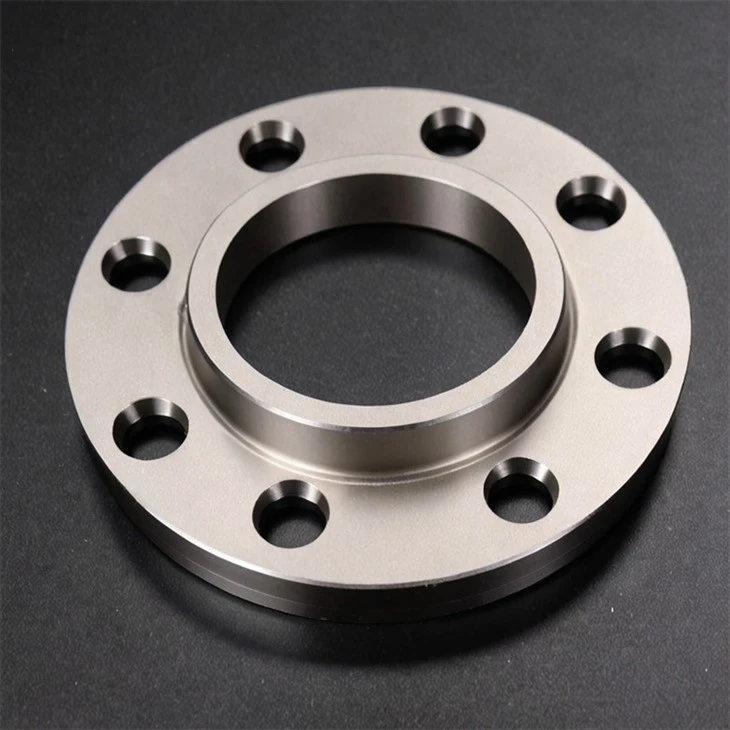
Professional CNC milling services, quick response, get a quote immediately


With 3-axis, 4-axis, and 5-axis designs, we employ multi-axis CNC milling technology to turn designers’ creativity and designs into reality, producing parts with complex shapes and high precision requirements.

productcate-1267-845


Process Introduction


Multi-axis Precision

Control By utilizing 3-axis, 4-axis, and 5-axis CNC milling, manufacturers are able to produce parts that are more complex and delicate. These parts are of great importance in fields such as automotive, aerospace, medical devices, and precision engineering. Multi-axis CNC milling technology allows designers to turn their creativity and designs into reality, producing parts with complex shapes and high precision requirements.

High-Precision Milling

The machining precision can reach IT5 level (±0.01mm) or higher, meeting the processing requirements for high-precision components from customers, such as those in the aerospace and automotive manufacturing industries.

Capability to Machine a Variety of Materials

The milling machine is capable of processing a variety of materials, including stainless steel, titanium alloys, aluminum alloys, carbon steels, and more.

  • CNC Milling Process

    Our CNC Milling Process services are designed to produce high-quality, precision-engineered parts. We specialize in manufacturing complex parts with tight tolerances and exceptional surface finishes,

  • CNC Millings

    Our CNC Milling services provide a comprehensive range of capabilities to produce high-quality, precision-engineered parts. We specialize in manufacturing complex parts with tight tolerances and

Advantage


High-precision processing

We have advanced CNC equipment, including 3-axis, 4-axis, and 5-axis mills, ensuring that the tolerance of the machined parts is in the micron level, meeting strict precision requirements, suitable for industries such as aerospace.

Node 1

Professional engineer team

Our engineer team has an average of 10 years of CNC machining experience, proficient in various CNC programming software, providing comprehensive services from design to finished product.

Node 2

Flexible production model

We can adapt to single pieces, small batches, and large-scale production, quickly respond to customer needs, and provide custom-made parts for on-time delivery.

Node 3

Comprehensive solution

In addition to CNC machining, we also provide services such as material selection, heat treatment, and surface treatment. We work closely with customers to provide technical support, reduce overall costs, and improve product competitiveness.

Node 4


Application Industry:

1.Aerospace industry
2.Automotive manufacturing
3.Medical equipment
4.Robotics
5.Consumer goods
6.…

image003

Material:

1.Aluminum
2.Stainless steel
3.Steel
4.Brass
5.Titanium alloy


Cooperation process


01/

Demand Confirmation:
Communicate with the customer to understand their needs and provide professional advice.

02/

Solution Quotation:
Develop a plan based on the requirements and provide a detailed quotation.

03/

Contract Signing:
Confirm the plan and quotation, and both parties sign the contract.

04/

Production Preparation:
Prepare the materials and equipment, and train the operators.

05/

Machining Production:
Perform CNC cutting according to the contract requirements.

06/

Quality Check:
Conduct quality checks after production and have the customer accept the goods.

07/

Delivery and After-sales:
Deliver the product and provide after-sales service.

08/

Settlement and Feedback:
Settle with the customer after delivery and collect feedback.

What Is CNC Milling


CNC milling is the typical machining process known as milling performed under the control of a computer. milling is the cutting of a material such as wood, metal, or plastic using a rotating tool. the controls in CNC milling dictate everything from the sequence of tools used and the toolpath of each cutter, to the spindle rpm and feed rate.


Advantages Of CNC Milling


Greater Precision: With computer programs running the cuts, CNC mills allow you to reach a higher level of precision than you could with a manual machine. because these machines don't rely on human operators, they leave less room for human error.


More Consistency: Another advantage of not having a human operator and minimizing human error is that CNC mills can produce more consistent products. if you need pieces that align precisely, take advantage of CNC milling's automated uniformity.


Less Waste: Fewer Errors Mean CNC Mills Produce Less Waste. CNC Machines Can Achieve Higher Efficiency With Their Cuts Than Manual Machines.


Faster Production: Because They're More Efficient And Don't Require a Human Operator, CNC Machines Can Also Complete a Product Much More Quickly Than Manual Mills.


Less Labor-Intensive: Save on labor costs by outsourcing to a company that offers CNC milling. doing so will also free up your current employees to work on other critical tasks because they no longer have to spend time operating a manual machine.


Simplified Complexity: If your piece requires many different cuts, tools or materials, many large CNC machines can more seamlessly integrate these changes, further contributing to a quicker, more efficient production process.

Why Choose Us
 

Rich Experience

Our company has many years of production work experience. The concept of customer-oriented and win-win cooperation makes the company more mature and stronger.

Competitive Price

We have professional sourcing team and cost accounting team, stive to reduce cost and profit and provide you a good price.

Sustainable Development

Establish a good reputation and brand value in the industry, and promote the sustainable, stable, rapid and healthy development of the enterprise.

Advanced Equipment

A machine, tool or instrument designed with advanced technology and functionality to perform highly specific tasks with greater precision, efficiency and reliability.

One Stop Solution

From the begining inquiry and throughout the entire process until you receive the goods. we are dedicated to supporting you every step of the way.

Quality Products

We use only the highest-grade materials and advanced manufacturing techniques to produce products that are reliable, durable, and perform to the highest standards.


CNC Milling Craftsmanship
CNC Milling Process
Bead Spraying Equipment
CNC Milling Process

Like most conventional mechanical CNC machining processes, the CNC milling process utilizes computerized controls to operate and manipulate machine tools which cut and shape stock material. in addition, the process follows the same basic production stages which all CNC machining processes do, including:

•Designing a Cad Model
•Converting The Cad Model Into a CNC Program
•Setting Up The CNC Milling Machine
•Executing The Milling Operation


The CNC milling process begins with the creation of a 2d or 3d cad part design. the finished design is exported to a CNC-compatible file format and converted via cam software into a CNC machine program, which determines the motion of the machine tool and the movement of the tool on the workpiece. before operators run a CNC program, they prepare the CNC milling machine by securing the workpiece to the machine tool work surface (i.e., the table) or workpiece fixture (such as a vise) and attaching the milling tool to the machine tool spindle.


The CNC milling process uses a horizontal or vertical CNC milling machine (depending on the specifications and requirements of the milling application) and rotating multi-point (i.e., multi-tooth) cutting tools such as milling cutters and drills. when the machine is ready, the operator starts a program through the machine interface, prompting the machine to perform a milling operation.


Once The CNC Milling Process Is Initiated, The Machine Begins Rotating The Cutting Tool At Speeds Reaching Up To Thousands Of Rpm. Depending On The Type Of Milling Machine Employed And The Requirements Of The Milling Application, As The Tool Cuts Into The Workpiece, The Machine Will Perform One Of The Following Actions To Produce The Necessary Cuts On The Workpiece:

•Slowly Feed The Workpiece Into The Stationary, Rotating Tool
•Move The Tool Across The Stationary Workpiece
•Move Both The Tool And Workpiece In Relation To Each Other


As opposed to manual milling processes, in CNC milling, typically the machine feeds moveable workpieces with the rotation of the cutting tool rather than against it. milling operations which abide by this convention are known as climb milling processes, while contrary operations are known as conventional milling processes.


Milling is best suited as a secondary or finishing process for an already machined workpiece, providing definition to or producing the part's features, such as holes, slots, and threads. the process is also used to shape a stock piece of material from start to finish. in both cases, the milling process gradually removes material to form the desired shape and form of the part.


The tool cuts small pieces - i.e., chips - off the workpiece to form the approximate shape and form. the workpiece undergoes the milling process at much higher accuracy and with greater precision to finish the part with its exact features and specifications. a completed part requires several machining passes to achieve the desired precision and tolerances. for more geometrically complex parts, multiple machine setups may be required to complete the fabrication process.


Once the milling operation is completed, and the part is produced to the custom-designed specifications, the milled part passes to the finishing and post-processing stages of production.

What Are The Steps Of The CNC Milling Process

To Get From The Cad Model To The Physical Part, Several Tasks Must Be Completed. The Steps Of The CNC Milling Process Are Described Below.

Making a Cad Model

The first step of the CNC milling process is to create a 3d cad model for the part to be fabricated. this cad model will include information pertaining to the size, geometry, and shape of the part. it's important for designers to develop cad models that are capable of actually being cut by their CNC milling machines. parts should be designed with no (or minimal) undercuts. the size of the undercut that can be machined depends on the capabilities of the specific CNC machine. undercuts are recessed or sunken features in a part that cannot be cut with standard tools. while undercuts can be cut by CNC mills, they typically require specialized tools, multi-axis milling machines, or both, leading to higher tooling and manufacturing costs.

Installing CNC Milling Machine

Once the cad model and the CNC program are ready, the CNC milling machine is prepared to fabricate the designed part. a machine operator will import the CNC program into the milling machine and insert a pre-prepared blank with the proper pre-machining dimensions into the workholding device of the machine. the specific tools, spindles, vices, and fixtures, are also set up in the machine.

Polished Anodized Aluminum Services

Converting Cad To CNC

Once a Suitable 3d Cad Model Has Been Developed For a Particular Part, a CNC Program Must Be Created To Control Its Fabrication On The CNC Milling Machine. Using Cam Software, The Designer Can Create Program Instructions For The CNC machine, to direct the movement of the tools and cutters during manufacturing. these programs are often written in g-code or m-code. the portions of the program written in g-code focus on the operating parameters of the tools, such as spindle speed, the direction of movement, and cut depth. m-code instructions focus on miscellaneous tasks such as tool changes, powering on and off the machine, and other auxiliary functions. cam software will often include a simulator that allows users to verify whether their CNC programs can successfully fabricate the desired part.

Executing The Program

With the cad model developed, the CNC program created, and the CNC milling machine prepared, the machining program can be executed. when a CNC program is running, human intervention is seldom needed. the CNC milling machine will follow the program line by line, completing all of the specified machining operations on the workpiece. once the full program has been executed, the part can move on to any subsequent planned manufacturing steps.


What Is The Equipment Used In The CNC Milling Process

Several Pieces Of Equipment Must Be Used In Tandem To Have a Successful CNC Milling Operation. The Equipment That Is Commonly Needed For CNC Milling Is Listed Below:


Worktable

The Worktable Is Used To Hold The Workpiece In Place During Machining.


Saddle

The saddle is located under the work table. it helps provide additional support and guides the movement of the worktable parallel to the rotating axis of the tool.


Knee

The knee is located under the saddle and helps provide support to both the saddle and worktable. its position can be adjusted vertically to accommodate different part thicknesses.


Spindle

The Spindle Is Used To Hold The Cutting Tool And Directs The Translational And Rotational Movement Of The Tool.


Arbor

The Arbor Is a Shaft That Is Assembled Through The Spindle. Tools Are Fixed To The Arbor.


Ram

The ram is an optional piece of equipment and is usually used in vertical milling or angular milling machines. it is used to help support the spindle.


Machine Tools

Cutting tools such as end mills and other tools are needed for CNC milling.


Interface

The interface is the point at which the operator can communicate with the computer controlling the CNC machine. this will usually consist of a keyboard and display screen, at a minimum.


How Does CNC Milling Work With Computer Software
Computer-aided design (cad) software allows manufacturers to create a 3d rendition of their product on the computer. this visualization process makes it easy to see what your product will look like once produced.

Though operator friendly, cad software is not necessarily machine friendly. CNC machines require numerical code that provides precise coordinates describing where they will need to make cuts. that’s where computer-aided manufacturing (cam) software comes in. an operator can seamlessly integrate your cad prototype with cam software, which will then translate the 3d design into numerical code the CNC machine can understand.

The end result is an incredibly precise reductive process that combines the benefits of automated manufacturing with milling machines’ wide range of motion across multiple axes.


How CNC Milling Works
CNC Milling is a subtractive manufacturing process that uses computer numerical control (CNC) machines to remove material from a workpiece, creating the desired shape. the CNC machine receives instructions through a g-code, which tells it how and where to move the cutting tool.

Unlike CNC turning machines, CNC milling machines have a complex setup with multiple axes and rotating tools, enabling cutting operations from various angles. CNC turning is primarily used for cylindrical parts, while CNC milling can produce a broader range of shapes and sizes.

Different factors determine the suitability of milling machines for specific applications. the complexity of CNC milling operations relies on the design of the end part. if the part or product is essential and of high quality, the design may need to be more intricate.

 
Applications of CNC Milling

As It Can Be Used For a Wide Range Of Materials, CNC Milling Is Used Across Many Industries, These Include:


Product Manufacturing
CNC milling is used to manufacture components for many common items. This includes household items, such as components for televisions and smartphones, as well as the computer mainframes used by large organizations.

Creation Of Design Prototypes
As well as being used in the production of component parts in product manufacturing, CNC milling is also used during the product development stage. CNC milling can be used to create prototypes and product models, which are tested and refined throughout the development process.

Aerospace

The aerospace industry utilizes CNC milling to create an extensive range of parts for aircraft. These parts include everything from fuselage structures to fuel bodies and landing gear component parts.

Automotive

CNC milling is used to manufacture auto parts, such as gears, axles, piston rods, cylinders, pumps, and more.

Medical

In the medical industry, CNC milling helps to meet the constant demand for new innovations. CNC milling is used to create medical instruments and tools, as well as orthotics and prosthetics.

Different Types Of Materials That Can Be Used With Cnc Milling

CNC milling isn’t limited to a single type of material. its versatile nature allows for the machining of various materials that are utilized in different industries. here are some commonly used materials in CNC milling:

Plastics

Different types of plastics, such as abs, nylon, and polycarbonate, are used for their lightweight and resistance to corrosion.

01

Wood

DIfferent varieties of wood, from soft to hardwoods, can also be milled using CNC machines.

02

Steel

Steel is famous for its strength, durability, and machinability. it is often used to produce automotive parts, industrial machinery, and tooling.

03

Titanium

Known For Its High Strength-To-Weight Ratio, Titanium Is Commonly Used In Aerospace Applications Due To Its Lightweight And Corrosion Resistance.

04

Aluminum

Lightweight And Easily Machinable, Aluminum Is a Popular Choice For Various Consumer Products, Automotive Parts, And Aircraft Components.

05


CNC Milling Vs CNC Turning


There are various CNC processes fit for different purposes, the two most common processes being CNC turning and CNC milling. the difference between turning and milling lies within the way the machine itself or the raw material moves. in CNC turning, the workpiece rotates against a cutting tool, whereas, in CNC milling, the material is held in place while the cutting tools rotate around it.


Due to the difference in movements, some processes will be more suited to milling or turning, respectively. for instance, as a milling machine has up to 5 axes of movement to manage- 3 linear ones in the x, y and z planes, as well as two rotational axes, it is better suited for creating more complex and intricate shapes.


Pro Tip: In Deciding Which CNC Machining Process Is Suited To What Design, The Biggest Determining Factor Is The Shape Of The Part Followed By The Size Of The Project.


Certifications
 
productcate-400-400
productcate-400-400
productcate-400-400
productcate-400-400


Our Factory

Shenzhen Guochanghong Precision Hardware Co., Ltd. We are a high-precision manufacturing company integrating mold design, manufacturing, assembly, sales and service. Our equipment is complete, and products can be completed in one stop from raw materials to finished products. We have a full set of precision equipment, including 4 precision aluminum alloy die-casting machines, 42 CNC lathes, 70 CNC machining centers, 35 drilling and tapping machines, 2 gear machines, 5 milling machines, and 6 medium-speed wire cutting machines.

productcate-1-1


FAQ

Q: Can you guarantee the milling accuracy to meet my specifications, while maintaining high surface quality?

A: Customers are concerned about the performance and appearance of the final product, so they need to ensure that milling operations meet the required precision without compromising surface quality.

Q: Do your pricing and delivery speed offer good value, while ensuring the quality of the parts is not affected?

A: Customers are looking for cost-effective services that maintain quality, without being overly expensive or taking too long to deliver.

Q: Can you handle parts made of different materials and complex shapes?

A: Customers may have a diverse product range that requires various materials and intricate designs, so they need to ensure that the milling service provider can adapt to these requirements.

Q: Will you provide timely technical support and after-sales service when my parts need further processing or encounter issues?

A: Customers want to ensure that in case of technical problems or the need for additional processing, the milling service provider can offer a quick response and effective solutions to minimize downtime and production delays.

Q: What Are The Benefits Of CNC Milling?

A: CNC milling has several benefits. for one, CNC machining offers an unprecedented degree of precision for machined parts. this allows tight-tolerance parts to be made both easily and efficiently. because CNC operations are computer-controlled, little to no human intervention is required. this leads to not just unmatched high production rates, but also the consistent quality and reduced labor costs.

Q: How Is CNC Milling Different From Normal Milling?

A: In traditional milling, two v-shaped or round jaws are used. for CNC milling, several different types of clamps may be used depending on your setup. regular milling is a machining process where an end mill manually is moved along a tool path to remove material from a workpiece.

Q: What Is The Difference Between CNC Turning And Milling?

A: CNC turning is best suited for producing components with axially symmetrical shapes. they include cylinders, disks, cones, and polygons. meanwhile, CNC milling can produce components with both symmetrical and non-symmetrical shapes.

Q: Which Is Better CNC Lathe Or CNC Milling?

A: A CNC conventional lathe is good for creating objects that are symmetrical and uniform across a cylindrical or conical surface. some examples are knobs, disc cams, crankshafts, screws, etc. cnc milling helps create flat surfaces, create pockets and grooves, and drill deep holes across a wide range of objects.

Q: What Are The Applications Of CNC Machining?

A: CNC milling machines are used to precisely and accurately cut metal and wood materials. however, the range of products and parts that can be cut with a CNC milling machine is almost limitless, as the machine can cut a vast array of shapes and angles.

Q: What Are The 3 Advantages Of CNC Machining?

A: Using this type of machine versus manual machining can result in improved accuracy, increased production speeds, enhanced safety, increased efficiency, and most of all cost savings.

Q: How Many Types Of CNC Milling Machines Are There?

A: Here Are The Different Types Of CNC Milling Machines Divided Into 3 Categories. the first two, horizontal and vertical milling machines, have been classified according to the orientation of the spindle. and the last category, 5-axis milling machines refers to the axes of movement that the machine has.

Q: What Is the difference between CNC Milling And CNC cutting?

A: One Of The Most Prominent Differences Between CNC Routers And Mills Is The Material They Can Cut. CNC Routers Can Cut Softer Materials Like Wood, Plastic, Foam And Non-Ferrous Metals Like Aluminum. They Are Less Rigid Than CNC Mills, So They Cannot Transfer Enough Force To Cut Through Harder Materials.

Q: What Is the best CNC mill to start with?

A: For small workshops and hobbyists looking to elevate their machining capabilities, the tormach 440 CNC mill is the perfect fit. its compact size allows for easy integration into limited workspace areas, while its user-friendly interface makes it accessible to beginners seeking to expand their skills in CNC milling.

Q: What are the advantages of CNC milling machine?

A: Using CNC machines are much safer than manually operated machines as they work behind a guard or even a closed, transparent safety door. CNC machining is more cost-effective. traditional machining requires one operator per machine.

Q: What Is The Main Advantage Of CNC Machines In Terms Of Precision?

A: Consistency. Because The Use Of a CNC Almost Eliminates Human Error, CNC Machines Are Highly Consistent And Accurate In The Work They Produce, Providing Clients With Uniform And Faultless Products.

Q: What are the advantages of CNC milling machine?

A: Using CNC machines are much safer than manually operated machines as they work behind a guard or even a closed, transparent safety door. CNC machining is more cost-effective. traditional machining requires one operator per machine.

As one of the most professional CNC milling companies in China, we're featured by good service and competitive price. Please rest assured to buy cost-efficient CNC milling from our factory. Contact us for custom service.

cnc machining career, fast cnc machining, cnc machining development

Send Inquiry