A: Die casting is a manufacturing process in which molten metal is forced into a mold cavity under high pressure. The mold, or die, is typically made of steel and can be used to produce complex shapes with high accuracy and repeatability.
Q: What are the advantages of die casting?
A: Die casting offers several benefits, including high production rates, cost-effectiveness for large quantities, and the ability to produce parts with intricate details and tight tolerances. It also allows for the use of a wide range of metals with different properties.
Q: What industries can benefit from die casting?
A: Die casting is widely used in various industries, including automotive, aerospace, electronics, telecommunications, and consumer goods. It is particularly suitable for applications that require high-quality, durable, and aesthetically pleasing metal components.
Q: How do I get started with your die casting services?
A: To get started, simply contact us with your project specifications and requirements. Our team will work closely with you to understand your needs and provide you with a customized solution, from material selection to the final delivery of your die casted parts.
Q: What materials can be die casted?
A: Most die castings are made from non-ferrous metals, specifically zinc, copper, aluminium, magnesium, lead, pewter, and tin-based alloys. Depending on the type of metal being cast, a hot- or cold-chamber machine is used.
Q: What are the two types of die casting?
A: The two main types of die casting processes are hot-chamber and cold-chamber die casting. Variations on these two types of die casting include: Low-pressure die casting. Vacuum die casting.
Q: Why would you use die casting?
A: Die casting is characterized by high dimensional accuracy and allows for the mass production of thin-walled products with complex shapes. Die casting also has the advantage of producing smooth casting surfaces requiring less machining after molding.
Q: What is the difference between die casting and mold casting?
A: While diecasting can produce castings with closer dimensional limits and thinner sections, permanent mold casting can produce parts with higher soundness . Porosity that often occurs in diecasting lowers the mechanical properties of the part and may cause blistering during thermal treatment.
Q: What is an example of die casting?
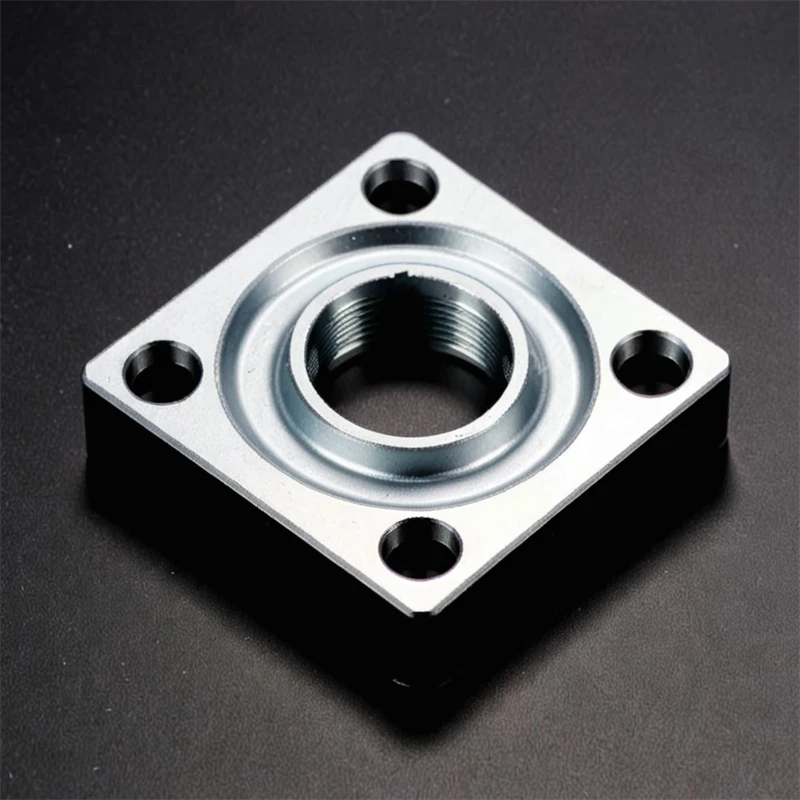
A: Die-cast parts can be found in many things; you are probably just unaware that they are made from die-cast metal. Locks and gears are common finished products. Other examples are hooks, toys, door handles, pumps, power tool housing, golf clubs and general engineering castings.
Q: What are the fundamentals of die casting?
A: Think function, before traditional form.
Performance must be sufficient, not equal.
Match material properties to performance specifications.
Q: What is the composition of die casting?
A: Manufacturers generally use die casting for high-volume production, especially for small to mid-sized castings. Die cast parts are ubiquitous, from everyday consumer objects such as sink faucets and steering wheels to industrial parts such as pneumatic nailers.
A: Die casting is an adaptable process that utilizes reusable steel molds, known as dies, to produce a wide variety of engineered industrial, commercial, and consumer parts for practical and cosmetic purposes. These molds can be designed to produce parts with a multitude of sizes, weights, and complex shapes and dimensions. The dies allow for a mass production of high volumes due to their ability to produce accurate parts repeatedly.
Q: What Is The Die Casting Process?
A: The variety of metal parts, ranging from the simple to the more complex and intricate, are made by the repeatable process of die casting. This is done by forcing molten metal under high pressure into the steel molds also known as dies. Die casting machines range in size, typically from 400 tons to 4,000 tons. However, that main difference between machines lies in their means of injecting the molten metal into the die, these methods are either hot or cold chamber. Due to the quick and repeatable nature of this process, die casting is the fastest process when it comes to producing precise non-ferrous metal parts.
Q: What Are The Advantages Of Choosing Die Casting?
A: The die casting process produces a wide variety of repeatedly precise parts, made of strong and dependable alloys, and is capable of versatile machining and finishing operations. Because die casting allows for a faster process and return, die cast parts are lower in cost than the alternatives. As opposed to other casting process, parts made from die casting are still lightweight but are stronger than their plastic alternatives. since die casting does not consist of separate parts joined together, the strength is that of the allow and not of welding or other joining process. Due to the versatile die casting opportunities, die casted parts can be made in a variety of shapes and sizes to fit a customers’ needs and specifications.
Q: Why is it called die casting?
A: The process is called diecasting due to its using dies. The dies are the steel mold made majorly by CNC machining to which you inject the liquid metal. It has two halves: the fixed half, which is stationary and attached to the casting machine and the ejector half which is movable.
Q: What is the difference between sand casting and die casting?
A: Sand casting and die casting are both important metal fabrication processes. The difference between both processes is the material used in forming the molds. On the one hand, the die casting process requires a metal mold. On the other hand, sand casting uses a mold made out of the sand. Also, die casting is only suitable for non-ferrous low melting point metals, while sand casting has a wider range of support.
Q: What is the difference between injection molding and casting?
A: Die casting, and injection molding have the same mechanism, i.e., injecting molten material into a die and allowing it to cool. However, injection molding uses such as ABS, polypropylene, TPU, and polyethylene, while die casting uses low melting points metals
Q: What is die casting commonly used with?
A: Hot-chamber die casting is a metal casting process specifically designed for low-melting-point alloys like zinc, tin, lead, and magnesium. This process is the most common and faster method than cold-chamber die casting.