


Can cnc millings be used for mold manufacturing?
Oct 27, 2025
Leave a message
Can CNC Millings be Used for Mold Manufacturing?
As a supplier of CNC Millings, I've been asked this question countless times: Can CNC millings be used for mold manufacturing? The answer is a resounding yes. In this blog post, I'll delve into the details of how CNC millings play a crucial role in mold manufacturing, exploring their capabilities, advantages, and the overall process.
Understanding CNC Millings
Before we discuss their application in mold manufacturing, let's briefly understand what CNC Millings are. CNC, which stands for Computer Numerical Control, refers to the automation of machine tools through the use of computers. A CNC milling machine is a versatile piece of equipment that uses rotary cutters to remove material from a workpiece. It can move the cutting tool in multiple axes, allowing for the creation of complex shapes and geometries with high precision.
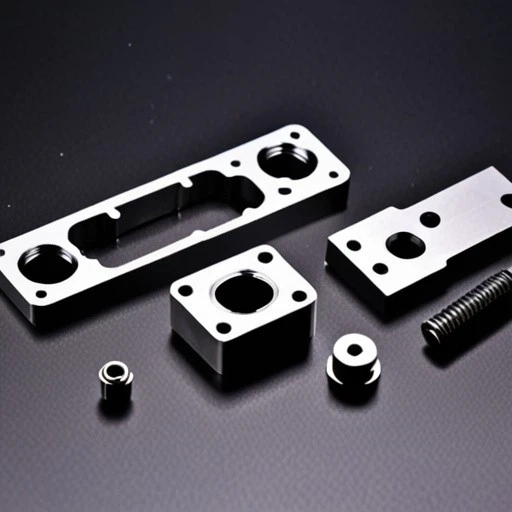

The Role of CNC Millings in Mold Manufacturing
Mold manufacturing involves creating a cavity or a form that can be used to shape a material into a specific product. This process requires high precision and accuracy, as even the slightest deviation can result in defective products. CNC millings are well-suited for this task due to their ability to achieve tight tolerances and produce complex shapes.
Precision and Accuracy
One of the primary advantages of using CNC millings in mold manufacturing is their precision. These machines can operate with tolerances as small as a few thousandths of an inch, ensuring that the mold is produced to exact specifications. This level of precision is crucial in industries such as automotive, aerospace, and electronics, where the quality of the final product depends on the accuracy of the mold.
Complex Geometries
Molds often require complex geometries, such as undercuts, intricate contours, and thin walls. CNC millings can easily handle these complex shapes by using multi-axis machining. With the ability to move the cutting tool in three, four, or even five axes, CNC milling machines can create molds with complex internal and external features that would be difficult or impossible to achieve with traditional machining methods.
Reproducibility
In mass production, it's essential to produce identical molds consistently. CNC millings offer excellent reproducibility, as the machining process is controlled by a computer program. Once the program is set up and verified, the machine can produce multiple molds with the same dimensions and quality, ensuring consistency in the final products.
The CNC Milling Process for Mold Manufacturing
The CNC Milling Process for mold manufacturing typically involves the following steps:
Design and Programming
The first step is to design the mold using computer-aided design (CAD) software. The CAD model is then converted into a CNC program using computer-aided manufacturing (CAM) software. The CAM program contains the instructions for the CNC milling machine, including the tool paths, cutting speeds, and feed rates.
Material Selection
The choice of material for the mold depends on the application and the type of material that will be molded. Common materials used for mold manufacturing include steel, aluminum, and plastic. The material is selected based on its strength, hardness, wear resistance, and thermal conductivity.
Machining
Once the design and programming are complete, the CNC milling machine begins the machining process. The machine uses a variety of cutting tools, such as end mills, ball mills, and drills, to remove material from the workpiece and create the desired shape of the mold. The machining process may involve roughing, semi-finishing, and finishing operations to achieve the required surface finish and dimensional accuracy.
Finishing
After the machining is complete, the mold may require additional finishing operations, such as polishing, heat treatment, and coating. These operations are performed to improve the surface quality, hardness, and corrosion resistance of the mold.
Advantages of Using CNC Millings for Mold Manufacturing
In addition to precision, complexity, and reproducibility, there are several other advantages of using CNC millings for mold manufacturing:
Efficiency
CNC millings are highly efficient, as they can operate continuously without the need for manual intervention. This reduces the production time and increases the overall productivity of the manufacturing process.
Cost-Effectiveness
Although the initial investment in a CNC milling machine may be high, it can result in significant cost savings in the long run. The ability to produce molds with high precision and reproducibility reduces the need for rework and scrap, which can save both time and money.
Flexibility
CNC millings are highly flexible, as they can be easily programmed to produce different types of molds. This makes them suitable for both small-scale and large-scale production, as well as for prototyping and custom mold manufacturing.
Conclusion
In conclusion, CNC millings are an excellent choice for mold manufacturing. Their precision, ability to handle complex geometries, reproducibility, and efficiency make them a valuable tool in the mold-making industry. Whether you're producing molds for automotive parts, consumer products, or medical devices, CNC millings can help you achieve high-quality results.
If you're interested in learning more about how our CNC millings can benefit your mold manufacturing process, or if you have any specific requirements, please don't hesitate to contact us. We'd be happy to discuss your needs and provide you with a customized solution.
References
- "CNC Machining Handbook" by John R. Walker
- "Mold Design and Manufacturing" by Paul D. Corsi
- Industry publications and research papers on CNC machining and mold manufacturing
Send Inquiry