


How does the rigidity of cnc millings affect the machining process?
Oct 07, 2025
Leave a message
Hey there! I'm a supplier of CNC Millings, and today I want to chat about how the rigidity of CNC millings affects the machining process. It's a topic that's super important in the world of manufacturing, and understanding it can really make a difference in the quality and efficiency of your machining operations.
What is Rigidity in CNC Millings?
First off, let's talk about what we mean by rigidity. In simple terms, rigidity refers to the ability of a CNC milling machine to resist deformation when subjected to cutting forces. A rigid machine is like a solid rock – it doesn't flex or vibrate easily, which is crucial for accurate and consistent machining.
There are a few key factors that contribute to the rigidity of a CNC milling machine. The frame and structure of the machine play a big role. Machines with heavy-duty frames and well-designed structures are generally more rigid. For example, a machine with a cast iron frame is often more rigid than one with a lighter steel frame because cast iron has better damping properties, which helps to absorb vibrations.
The spindle is another important component when it comes to rigidity. A high-quality spindle with a large diameter and a short overhang will be more rigid. The overhang is the distance from the spindle bearing to the cutting tool. A shorter overhang means less deflection of the tool during cutting, resulting in better accuracy.
How Rigidity Affects Machining Accuracy
One of the most significant ways that rigidity affects the machining process is in terms of accuracy. When a CNC milling machine is rigid, it can hold the cutting tool in a precise position, allowing for accurate cuts. This is especially important when machining parts with tight tolerances.
Let's say you're machining a part that requires a hole to be drilled with a tolerance of ±0.01 mm. If your machine isn't rigid enough, the cutting tool might deflect slightly under the cutting forces, causing the hole to be drilled slightly off-center or with a larger or smaller diameter than specified. This can lead to parts that don't fit together properly or don't meet the required specifications.
On the other hand, a rigid machine will keep the tool in place, ensuring that the hole is drilled exactly where it needs to be and with the correct diameter. This results in parts that are more accurate and of higher quality.
Impact on Surface Finish
Rigidity also has a big impact on the surface finish of the machined parts. When a machine is rigid, there is less vibration during the cutting process. Vibration can cause chatter marks on the surface of the part, which can make the surface rough and uneven.
For example, if you're milling a flat surface on a piece of metal, a non-rigid machine might cause the cutting tool to vibrate, leaving behind small ridges or waves on the surface. This not only looks bad but can also affect the functionality of the part. A smooth surface finish is often required for parts that will be used in applications where friction or sealing is important.
A rigid machine, on the other hand, will produce a much smoother surface finish. The cutting tool will move smoothly through the material, without the vibrations that cause chatter marks. This results in parts that have a better aesthetic appearance and perform better in their intended applications.
Influence on Tool Life
The rigidity of a CNC milling machine can also affect the life of the cutting tools. When a machine is not rigid, the cutting tool is subjected to more stress and vibration. This can cause the tool to wear out more quickly, leading to frequent tool changes.
Tool changes are not only time-consuming but also expensive. You have to stop the machining process, remove the old tool, and install a new one. This downtime can reduce the productivity of your machining operations.
In a rigid machine, the cutting tool is more stable, and the stress on the tool is reduced. This means that the tool will wear out more slowly, resulting in longer tool life. Longer tool life means fewer tool changes, which saves time and money in the long run.
Productivity and Rigidity
Productivity is another area where the rigidity of a CNC milling machine makes a big difference. A rigid machine can handle higher cutting speeds and feeds without sacrificing accuracy or surface finish. This means that you can machine parts more quickly, increasing the output of your machining operations.
For example, if you're milling a large block of material, a rigid machine can take deeper cuts and move the cutting tool at a faster speed. This reduces the overall machining time compared to a non-rigid machine, which might have to take smaller cuts and move more slowly to maintain accuracy.
In addition, a rigid machine is less likely to experience breakdowns or malfunctions due to vibration or deflection. This means less downtime for maintenance and repairs, further increasing the productivity of your machining operations.
Choosing the Right Rigid CNC Milling Machine
If you're in the market for a CNC milling machine, it's important to consider the rigidity of the machine. Look for machines with a heavy-duty frame, a high-quality spindle, and a well-designed structure. You can also ask the manufacturer about the machine's rigidity specifications, such as the static and dynamic stiffness.
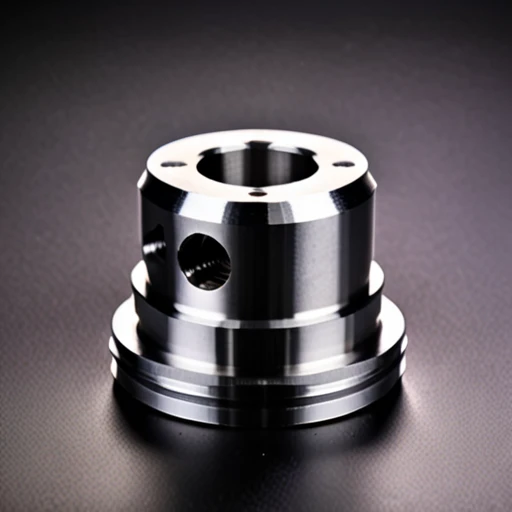

It's also a good idea to look at customer reviews and testimonials. Other users can provide valuable insights into the real-world performance of the machine, including its rigidity and how it affects the machining process.
Conclusion
In conclusion, the rigidity of CNC millings has a profound impact on the machining process. It affects accuracy, surface finish, tool life, and productivity. As a supplier of CNC Millings, I know how important it is to choose a rigid machine for your machining operations.
If you're interested in learning more about our CNC millings or if you have any questions about how rigidity can affect your machining process, feel free to reach out. We're here to help you make the best choice for your manufacturing needs. Whether you're a small shop or a large manufacturing facility, we can provide you with the right CNC milling machine to meet your requirements. So, don't hesitate to contact us for more information and to start the procurement and negotiation process.
References
- Smith, J. (2020). CNC Machining Handbook. Publisher XYZ.
- Johnson, A. (2019). The Impact of Machine Rigidity on Machining Quality. Journal of Manufacturing Technology, 15(2), 45-52.
Send Inquiry