


What are the challenges of CNC milling for complex geometries?
Aug 14, 2025
Leave a message
In the dynamic landscape of modern manufacturing, CNC milling stands as a cornerstone technology, enabling the production of intricate and precise parts across various industries. As a seasoned CNC milling supplier, I've witnessed firsthand the remarkable capabilities and challenges that come with machining complex geometries. In this blog post, I'll delve into the intricacies of CNC milling for complex geometries, exploring the hurdles we face and the strategies we employ to overcome them.
Understanding Complex Geometries in CNC Milling
Before we dive into the challenges, let's first define what we mean by complex geometries in the context of CNC milling. Complex geometries refer to parts with intricate shapes, contours, and features that deviate from simple, regular forms. These can include freeform surfaces, undercuts, thin walls, deep cavities, and fine details that require high precision and accuracy. Examples of industries that frequently demand complex geometries include aerospace, automotive, medical, and electronics, where the performance and functionality of components often depend on their precise shape and dimensions.
Challenges of CNC Milling for Complex Geometries
Tool Selection and Wear
One of the primary challenges in CNC milling complex geometries is selecting the right cutting tools. Different geometries require different tool geometries, coatings, and materials to achieve optimal results. For example, machining deep cavities may require long-reach end mills, while cutting thin walls may necessitate small-diameter tools with high aspect ratios. Additionally, the high forces and temperatures generated during milling complex geometries can cause rapid tool wear, leading to dimensional inaccuracies, surface finish degradation, and increased production costs. As a supplier, we invest in high-quality cutting tools and regularly monitor their performance to ensure consistent quality and productivity.
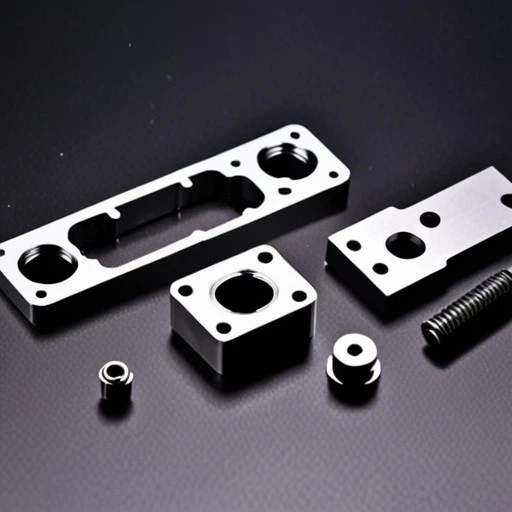

Machining Strategies
Developing effective machining strategies is crucial for successfully milling complex geometries. Unlike simple geometries, complex parts often require multiple setups, tool changes, and machining operations to achieve the desired shape and finish. This can increase the machining time and complexity, as well as the risk of errors and collisions. To overcome these challenges, we use advanced CAD/CAM software to generate optimized toolpaths that minimize cutting forces, reduce tool wear, and improve surface finish. We also employ techniques such as high-speed machining, trochoidal milling, and adaptive machining to increase productivity and efficiency.
Fixturing and Workholding
Proper fixturing and workholding are essential for ensuring the stability and accuracy of the workpiece during CNC milling. Complex geometries can make it challenging to find suitable fixtures that securely hold the part without interfering with the machining process. Additionally, the high forces and vibrations generated during milling can cause the workpiece to shift or deform, leading to dimensional inaccuracies and surface finish problems. As a supplier, we design and manufacture custom fixtures that are specifically tailored to the geometry and requirements of each part. We also use advanced workholding techniques such as vacuum chucks, magnetic chucks, and hydraulic clamps to ensure maximum stability and accuracy.
Surface Finish and Tolerance Control
Achieving the desired surface finish and tolerance is a critical challenge in CNC milling complex geometries. The irregular shapes and contours of complex parts can make it difficult to achieve a smooth and uniform surface finish, especially in hard-to-reach areas. Additionally, the tight tolerances required for many complex geometries can be challenging to maintain, especially when machining with high forces and temperatures. To overcome these challenges, we use advanced machining techniques such as finish milling, grinding, and polishing to achieve the desired surface finish. We also employ precision measuring equipment such as coordinate measuring machines (CMMs) and optical scanners to verify the dimensional accuracy of the parts and ensure that they meet the customer's specifications.
Programming and Simulation
CNC milling complex geometries requires sophisticated programming and simulation skills. The complex toolpaths and machining operations involved in milling complex parts can be difficult to program manually, especially for parts with freeform surfaces and intricate features. Additionally, programming errors can lead to costly mistakes and delays in production. To overcome these challenges, we use advanced CAD/CAM software that allows us to generate accurate and efficient toolpaths based on the part geometry and machining requirements. We also use simulation software to verify the toolpaths and detect any potential errors or collisions before they occur on the machine.
Overcoming the Challenges
Despite the challenges of CNC milling complex geometries, there are several strategies and technologies that can help us overcome them. As a supplier, we invest in the latest CNC milling machines, cutting tools, and software to ensure that we have the capabilities and expertise to handle even the most complex parts. We also have a team of experienced engineers and technicians who are trained in the latest machining techniques and technologies, allowing us to provide our customers with high-quality, precision-machined parts on time and within budget.
In addition to investing in technology and expertise, we also focus on building strong relationships with our customers. By working closely with them from the initial design stage to the final production, we can understand their specific requirements and challenges and develop customized solutions that meet their needs. We also provide our customers with regular updates on the progress of their projects and offer technical support and advice throughout the manufacturing process.
Conclusion
CNC milling complex geometries presents a unique set of challenges that require a combination of advanced technology, expertise, and innovation. As a CNC milling supplier, we are committed to staying at the forefront of the industry by investing in the latest equipment, software, and training. By understanding the challenges and developing effective strategies to overcome them, we can provide our customers with high-quality, precision-machined parts that meet their most demanding requirements.
If you're looking for a reliable CNC milling supplier who can handle complex geometries with precision and efficiency, please don't hesitate to [contact us]. We'd be happy to discuss your project and provide you with a quote.
References
- Smith, J. (2020). CNC Milling Handbook. Industrial Press.
- Dornfeld, D., Minis, I., & Takeuchi, Y. (2018). Handbook of Manufacturing Engineering and Technology. Springer.
- DeVor, R. E., Kapoor, S. G., & Ziegert, J. C. (2012). Manufacturing Engineering and Technology. Pearson.
Send Inquiry