


What are the chemical reactions involved in anodizing?
Nov 10, 2025
Leave a message
Anodizing is a widely used electrochemical process that enhances the surface properties of metals, particularly aluminum. As an anodized supplier, I've witnessed firsthand the remarkable benefits and the intricate chemical reactions involved in this process. In this blog, I'll delve into the chemical reactions that take place during anodizing, shedding light on the science behind this essential finishing technique.
The Basics of Anodizing
Anodizing is an electrolytic passivation process used to increase the thickness of the natural oxide layer on the surface of metal parts. The most commonly anodized metal is aluminum, but other metals such as magnesium and titanium can also undergo this process. The anodizing process involves immersing the metal part in an electrolyte solution and passing an electric current through it. This causes oxidation to occur on the surface of the metal, forming a protective oxide layer.
Chemical Reactions in Anodizing
The anodizing process can be divided into several stages, each with its own set of chemical reactions. Let's take a closer look at these reactions.
Initial Oxidation
When the metal part is immersed in the electrolyte solution and the electric current is applied, the first reaction that occurs is the oxidation of the metal at the anode. In the case of aluminum, the following reaction takes place:
[2Al \rightarrow 2Al^{3+}+ 6e^-]
This reaction releases aluminum ions ((Al^{3+})) into the electrolyte solution and electrons ((e^-)) that flow through the external circuit.
Formation of the Oxide Layer
The aluminum ions ((Al^{3+})) released during the oxidation reaction react with the oxygen in the electrolyte solution to form aluminum oxide ((Al_2O_3)). The reaction can be represented as follows:
[4Al^{3+}+ 6O^{2-}\rightarrow 2Al_2O_3]
This reaction results in the formation of a thin, porous oxide layer on the surface of the aluminum. The porosity of the oxide layer is crucial as it allows for further processing, such as coloring and sealing.
Electrolyte Reactions
The electrolyte solution used in anodizing plays a vital role in the process. Commonly used electrolytes include sulfuric acid, chromic acid, and oxalic acid. These acids dissociate in the solution, providing the necessary ions for the anodizing process.
For example, in a sulfuric acid electrolyte, the following dissociation reaction occurs:
[H_2SO_4\rightarrow 2H^++ SO_4^{2-}]
The hydrogen ions ((H^+)) are involved in the reduction reaction at the cathode, while the sulfate ions ((SO_4^{2-})) help to maintain the conductivity of the solution.
At the cathode, the reduction reaction takes place:
[6H^++ 6e^-\rightarrow 3H_2\uparrow]
This reaction produces hydrogen gas at the cathode.
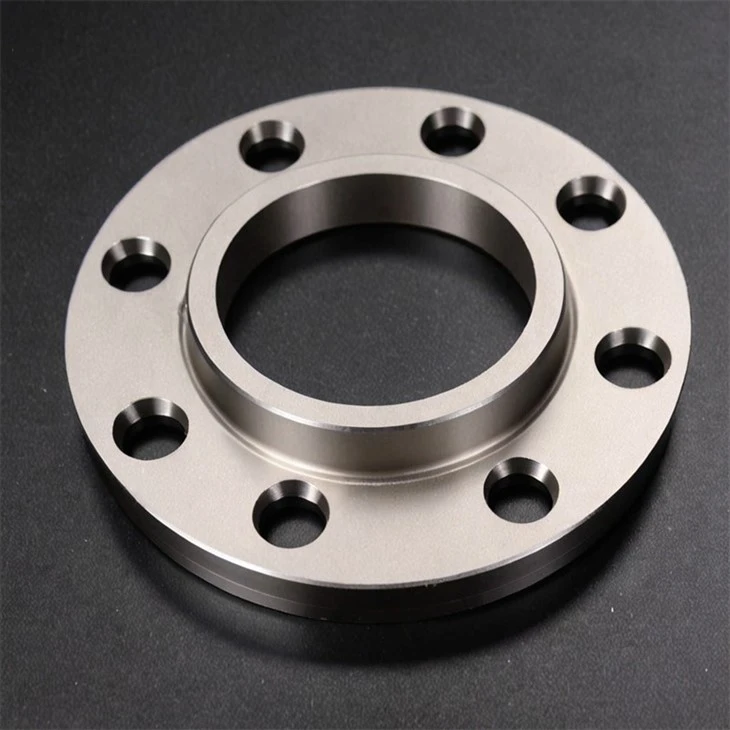

Coloring and Sealing Reactions
After the formation of the oxide layer, the anodized part can be colored to achieve the desired aesthetic effect. There are two main methods of coloring: integral coloring and dyeing.
In integral coloring, the color is formed during the anodizing process itself. This is achieved by adding specific metal salts to the electrolyte solution. For example, the addition of nickel salts can result in a bronze color. The metal ions in the salts are incorporated into the oxide layer, giving it a specific color.
Dyeing, on the other hand, involves immersing the anodized part in a dye solution. The porous nature of the oxide layer allows the dye molecules to penetrate and be absorbed, resulting in a colored surface.
Once the coloring process is complete, the anodized part is sealed to improve its corrosion resistance and durability. Sealing can be done using various methods, such as hot water sealing or nickel acetate sealing.
In hot water sealing, the anodized part is immersed in hot water. The water reacts with the aluminum oxide in the oxide layer, forming a hydrated aluminum oxide ((Al_2O_3\cdot H_2O)) that fills the pores and seals the surface. The reaction can be represented as follows:
[Al_2O_3+ H_2O\rightarrow Al_2O_3\cdot H_2O]
In nickel acetate sealing, the anodized part is immersed in a nickel acetate solution. The nickel ions in the solution react with the aluminum oxide to form a nickel-aluminum oxide complex that seals the pores.
Importance of Understanding Chemical Reactions in Anodizing
As an anodized supplier, understanding the chemical reactions involved in anodizing is crucial for several reasons. Firstly, it allows us to optimize the anodizing process to achieve the desired properties of the anodized parts. By controlling the electrolyte composition, current density, and other process parameters, we can ensure the formation of a high-quality oxide layer with the right thickness, porosity, and color.
Secondly, understanding the chemical reactions helps us to troubleshoot any issues that may arise during the anodizing process. For example, if the oxide layer is too thin or has poor adhesion, we can analyze the chemical reactions and adjust the process parameters accordingly.
Finally, knowledge of the chemical reactions in anodizing enables us to develop new and innovative anodizing techniques. We can explore the use of different electrolytes, additives, and process conditions to create anodized parts with unique properties and applications.
Our Anodizing Services
At our company, we offer a wide range of anodizing services, including Polished Anodized Aluminum Services, Anodizing Metal Services, and Aluminum Anodized Services. Our team of experts has in-depth knowledge of the chemical reactions involved in anodizing and uses state-of-the-art equipment and techniques to ensure the highest quality of our anodized products.
Whether you need anodized parts for architectural applications, automotive components, or electronic devices, we can provide customized solutions to meet your specific requirements. Our anodized products offer excellent corrosion resistance, wear resistance, and aesthetic appeal, making them suitable for a wide range of industries.
Contact Us for Anodizing Solutions
If you're interested in our anodizing services or have any questions about the chemical reactions involved in anodizing, we'd love to hear from you. Contact us today to discuss your anodizing needs and explore how we can help you achieve the best results for your projects.
References
- Metals Handbook: Volume 5: Surface Engineering, ASM International.
- Principles of Corrosion Engineering and Corrosion Control, T. R. Beck.
- Electrochemical Engineering, John Newman and Karen E. Thomas-Alyea.
Send Inquiry