


What are the die casting process for automotive wheel parts?
Nov 28, 2025
Leave a message
Die casting is a manufacturing process that has been widely used in the automotive industry, especially for producing wheel parts. As a die casting supplier, I am well - versed in the various die casting processes for automotive wheel parts. In this blog, I will delve into the details of these processes, their advantages, and considerations.
Introduction to Die Casting for Automotive Wheel Parts
Automotive wheel parts require high strength, good dimensional accuracy, and excellent surface finish. Die casting offers a cost - effective and efficient way to meet these requirements. It involves forcing molten metal under high pressure into a steel mold cavity, which is the die. Once the metal solidifies, the die is opened, and the cast part is ejected.
Types of Die Casting Processes for Automotive Wheel Parts
High Pressure Die Casting
High Pressure Die Casting (HPDC) is one of the most commonly used processes for automotive wheel parts. In this process, molten metal is injected into the die cavity at extremely high pressures, typically ranging from 10 to 175 megapascals. This high pressure ensures that the metal fills the cavity quickly and completely, resulting in parts with fine details and excellent dimensional accuracy.
The HPDC process can be further divided into two subtypes: cold - chamber and hot - chamber die casting. Cold - chamber die casting is suitable for metals with high melting points, such as aluminum. In this process, the molten metal is ladled into a cold chamber and then injected into the die cavity using a hydraulic plunger. Hot - chamber die casting, on the other hand, is used for metals with low melting points, like zinc. Here, the injection system is submerged in the molten metal, and the metal is forced into the die cavity by a piston.
High Pressure Die Casting Services offer a wide range of benefits for automotive wheel parts. The high - pressure injection results in parts with high density, which translates to better mechanical properties. Additionally, the fast cycle times of HPDC make it suitable for high - volume production, reducing the overall cost per part.
Aluminum Die Casting
Aluminum is a popular choice for automotive wheel parts due to its lightweight, high strength - to - weight ratio, and good corrosion resistance. Aluminum Die Casting Services play a crucial role in the production of these parts.
The aluminum die casting process starts with melting the aluminum alloy in a furnace. Once the metal reaches the appropriate temperature, it is transferred to the die casting machine. In the case of cold - chamber HPDC, the molten aluminum is ladled into the cold chamber and then injected into the die cavity.
One of the key advantages of aluminum die casting for wheel parts is its ability to produce complex shapes. The low viscosity of molten aluminum allows it to flow easily into thin - walled sections and intricate geometries, which is essential for modern automotive wheel designs. Moreover, aluminum wheels are lighter than their steel counterparts, which can improve fuel efficiency and vehicle handling.
Zinc Die Casting
Zinc is another metal commonly used in die casting for automotive wheel parts, especially for smaller components or parts that require high precision. Zinc Die Casting Services offer unique benefits for these applications.
Zinc has a relatively low melting point, which makes it suitable for hot - chamber die casting. This process is faster and more energy - efficient compared to cold - chamber die casting. Zinc die - cast parts have excellent surface finish and can be easily plated or painted, which is important for the aesthetic requirements of automotive wheel parts.
Zinc also has good castability, meaning it can fill the die cavity with high precision, resulting in parts with tight tolerances. Additionally, zinc alloys have good impact strength and ductility, which are important properties for wheel components that may be subjected to various forces during vehicle operation.
The Die Casting Process Steps for Automotive Wheel Parts
Die Design and Preparation
The first step in the die casting process is the design and preparation of the die. The die is a critical component as it determines the shape and dimensions of the final part. The design must take into account factors such as the part geometry, draft angles, and gate locations.
Advanced computer - aided design (CAD) and computer - aided manufacturing (CAM) technologies are used to create the die design. Once the design is finalized, the die is machined from high - quality steel. The die is then heat - treated to improve its hardness and wear resistance.
Melting and Alloying
The next step is to melt the metal and prepare the alloy. For aluminum die casting, the aluminum alloy is melted in a furnace at a temperature typically between 650°C and 750°C. The alloy composition is carefully controlled to ensure that the final part has the desired mechanical properties.
In the case of zinc die casting, the zinc alloy is melted at a lower temperature, around 400°C to 450°C. The alloy may contain small amounts of other elements, such as aluminum, copper, and magnesium, to enhance its properties.
Injection
Once the metal is molten and the alloy is prepared, it is time for the injection process. In high - pressure die casting, the molten metal is forced into the die cavity at high speed and pressure. The injection speed and pressure are carefully controlled to ensure that the metal fills the cavity evenly and without any air entrapment.
The injection process is a critical step as it can affect the quality of the final part. If the injection speed is too slow, the metal may solidify before filling the entire cavity, resulting in incomplete parts. On the other hand, if the injection pressure is too high, it may cause flash or other defects.
Cooling and Solidification
After the metal is injected into the die cavity, it begins to cool and solidify. The cooling rate is an important factor as it can affect the microstructure and mechanical properties of the part. A controlled cooling rate is maintained to ensure that the part has uniform properties throughout.
The die is usually equipped with cooling channels to help regulate the temperature. Once the metal has solidified, the die is opened, and the part is ejected.
Trimming and Finishing
After ejection, the part may have some excess material, such as flash or sprues. These are removed through a trimming process. The part is then subjected to various finishing operations, such as machining, grinding, and polishing, to achieve the desired surface finish and dimensional accuracy.
Quality Control in Die Casting for Automotive Wheel Parts
Quality control is of utmost importance in the die casting process for automotive wheel parts. As a die casting supplier, we implement a comprehensive quality control system to ensure that every part meets the strict requirements of the automotive industry.

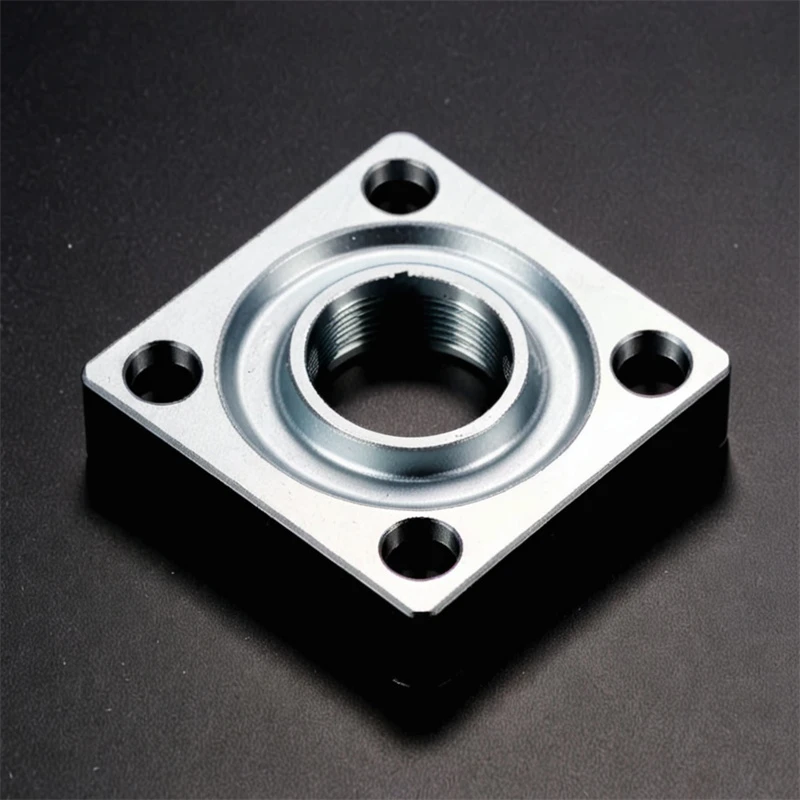
We use non - destructive testing methods, such as X - ray inspection and ultrasonic testing, to detect any internal defects in the parts. Dimensional inspection is also carried out using precision measuring instruments to ensure that the parts meet the specified tolerances.
In addition, mechanical testing is performed on sample parts to evaluate their strength, hardness, and other mechanical properties. Only parts that pass all the quality control tests are approved for use in automotive applications.
Considerations for Die Casting Automotive Wheel Parts
When choosing a die casting process for automotive wheel parts, several factors need to be considered.
Cost
Cost is a significant consideration, especially for high - volume production. The choice of metal, die casting process, and production volume can all affect the cost. For example, aluminum die casting may be more expensive than zinc die casting due to the higher cost of the raw material and the more complex melting and injection processes. However, the lightweight and high - strength properties of aluminum may justify the higher cost in some applications.
Design Complexity
The complexity of the part design also plays a role in the choice of die casting process. Parts with complex geometries may require high - pressure die casting to ensure that the metal fills all the details of the cavity. On the other hand, simpler parts may be more suitable for other processes or less expensive die designs.
Mechanical Properties
The mechanical properties required for the wheel parts, such as strength, hardness, and ductility, are important factors. Different metals and alloys have different mechanical properties, and the choice of material should be based on the specific requirements of the application.
Contact for Procurement and洽谈
If you are in the market for high - quality die - cast automotive wheel parts, we are here to help. As a professional die casting supplier, we have the expertise and experience to meet your specific needs. Whether you require aluminum, zinc, or other metal die - cast parts, we can provide you with cost - effective solutions.
We offer a wide range of die casting services, including High Pressure Die Casting Services, Aluminum Die Casting Services, and Zinc Die Casting Services. Our team of experts can work with you from the initial design stage to ensure that the final parts meet your exact specifications.
Contact us today to discuss your requirements and start a partnership for high - quality automotive wheel parts.
References
- Campbell, J. (2003). Castings. Butterworth - Heinemann.
-ASM Handbook Committee. (2008). ASM Handbook, Volume 15: Casting. ASM International. - Schweitzer, P. A. (2006). Die Casting Handbook: Technology, Design, Manufacturing. William Andrew Publishing.
Send Inquiry