


What is die casting?
Sep 30, 2025
Leave a message
What is Die Casting?
Die casting is a manufacturing process that has been revolutionizing the production of metal parts for decades. As a die casting supplier, I've witnessed firsthand the incredible versatility and efficiency this process offers. In this blog post, I'll delve into what die casting is, its various types, materials used, advantages, and why it's a go - to choice for many industries.
The Basics of Die Casting
At its core, die casting is a method of forcing molten metal under high pressure into a mold cavity, which is machined into two hardened tool steel dies. These dies are designed to create a specific shape, and once the molten metal cools and solidifies, the dies are opened, and the finished part is ejected. This process is highly repeatable, allowing for the mass production of complex and precise metal parts with minimal post - processing required.
Types of Die Casting
There are mainly two types of die casting: high - pressure die casting and low - pressure die casting.
High - Pressure Die Casting
High - pressure die casting is one of the most common forms of die casting. In this process, molten metal is injected into the die cavity at extremely high pressures, typically ranging from 1,000 to 20,000 psi. This high pressure ensures that the metal fills the cavity quickly and completely, resulting in parts with excellent surface finish and dimensional accuracy.
As a die casting supplier, we offer High Pressure Die Casting Services that can produce parts with thin walls and complex geometries. The high - speed injection also allows for rapid production cycles, making it ideal for large - volume manufacturing.
Low - Pressure Die Casting
Low - pressure die casting, on the other hand, uses lower pressures, usually around 10 - 100 psi. In this process, the molten metal is pushed upwards into the die cavity from a holding furnace through a riser tube. This method is often used for producing parts that require less porosity and better mechanical properties, such as automotive wheels. Although the production cycle is slower compared to high - pressure die casting, the quality of the parts can be superior in certain applications.
Materials Used in Die Casting
Several metals can be used in the die casting process, each with its own unique properties and advantages.
Aluminum
Aluminum is one of the most popular materials for die casting. It is lightweight, corrosion - resistant, and has excellent thermal and electrical conductivity. Aluminum die - cast parts are widely used in the automotive, aerospace, and electronics industries. As a supplier, we provide Aluminum Die Casting Services that can produce high - quality aluminum parts with tight tolerances. The low density of aluminum also makes it an environmentally friendly choice, as it reduces the overall weight of the final product, leading to lower energy consumption during use.
Zinc
Zinc is another commonly used material in die casting. It has a lower melting point than aluminum, which means it requires less energy to melt and cast. Zinc die - cast parts are known for their high precision, excellent surface finish, and good mechanical properties. They are often used in the production of small, intricate parts such as hardware, electrical components, and consumer products. We offer Zinc Die Casting Services to meet the diverse needs of our customers.
Magnesium
Magnesium is the lightest structural metal, making it an attractive option for applications where weight reduction is critical. It has good strength - to - weight ratio and excellent castability. However, magnesium is more reactive than aluminum and zinc, and special handling and processing techniques are required to ensure safe and efficient die casting.
Advantages of Die Casting
There are numerous advantages to using die casting for manufacturing metal parts.
Precision and Complexity
Die casting allows for the production of parts with extremely high precision and complex geometries. The dies can be machined to create detailed features such as holes, threads, and ribs, eliminating the need for additional machining operations in many cases. This results in parts that fit together perfectly and perform as intended.
High Production Rates
One of the biggest advantages of die casting is its high production rate. Once the dies are set up, parts can be produced quickly and consistently. This makes it a cost - effective option for large - volume production, as the per - part cost decreases as the production volume increases.
Excellent Surface Finish
The high - pressure injection in die casting results in parts with a smooth and uniform surface finish. This reduces the need for additional finishing operations such as polishing or painting, saving time and money in the production process.
Material Properties
Die - cast parts can have excellent mechanical properties, such as high strength, hardness, and durability. The rapid cooling of the molten metal during the die casting process can also result in a fine - grained microstructure, which further enhances the part's performance.
Applications of Die Casting
Die casting is used in a wide range of industries, including:
Automotive Industry
In the automotive industry, die - cast parts are used in engines, transmissions, chassis, and body components. Aluminum and magnesium die - cast parts are particularly popular due to their lightweight properties, which help improve fuel efficiency.
Aerospace Industry
The aerospace industry requires parts that are lightweight, strong, and precise. Die casting is used to produce components such as turbine blades, brackets, and housings.
Electronics Industry
In the electronics industry, die - cast parts are used in the production of enclosures, heat sinks, and connectors. The excellent thermal conductivity of aluminum makes it a popular choice for heat - dissipating components.
Consumer Goods Industry
Die - cast parts are also widely used in the consumer goods industry, for products such as appliances, toys, and furniture hardware. The ability to produce complex shapes and high - quality surface finishes makes die casting an ideal manufacturing process for these applications.
Why Choose Our Die Casting Services
As a die casting supplier, we are committed to providing high - quality products and excellent customer service. Our team of experienced engineers and technicians uses the latest technology and equipment to ensure that every part we produce meets the highest standards of quality and precision.
We offer a wide range of die casting services, including aluminum, zinc, and high - pressure die casting. Our state - of - the - art facilities allow us to handle projects of all sizes, from small - scale prototypes to large - volume production runs.
We also understand the importance of cost - effectiveness and on - time delivery. We work closely with our customers to optimize the design and production process, reducing costs without compromising on quality. Our efficient production processes and supply chain management ensure that your parts are delivered on time, every time.
Contact Us for Your Die Casting Needs
If you're in the market for high - quality die - cast parts, we'd love to hear from you. Whether you're looking for a partner to help you with a new product development or need to source parts for an existing project, we have the expertise and capabilities to meet your requirements.

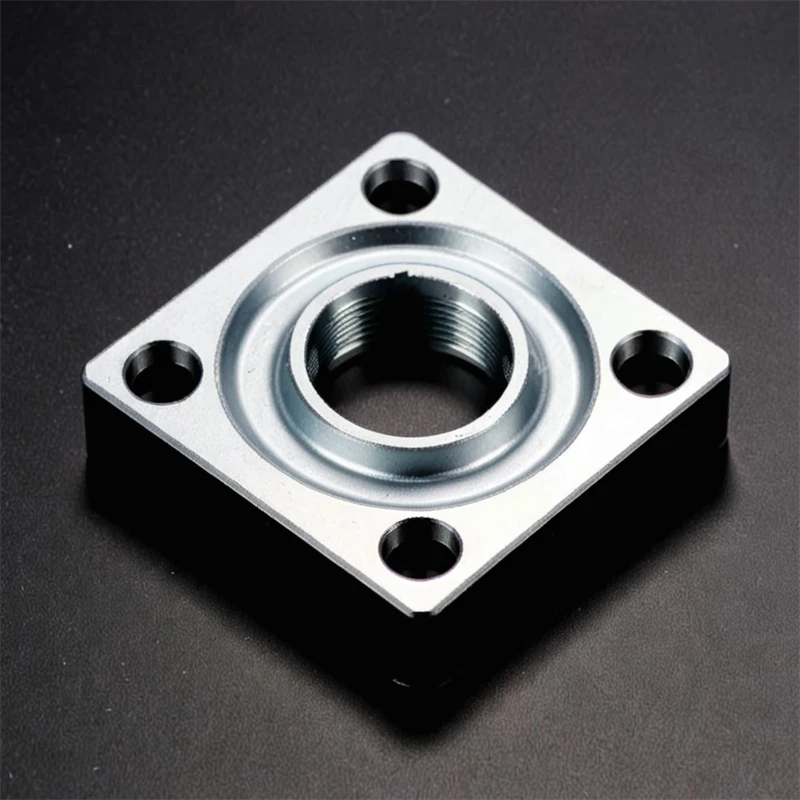
Contact us today to discuss your die casting needs and let us help you take your project to the next level.
References
- Campbell, J. (2003). Castings. Butterworth - Heinemann.
- ASM Handbook Committee. (2008). ASM Handbook, Volume 15: Casting. ASM International.
- Tschaetsch, H., & Semiatin, S. L. (2001). Metal Forming Fundamentals and Applications. CRC Press.
Send Inquiry