


What is the die casting pressure?
Dec 15, 2025
Leave a message
What is the die casting pressure? Well, as a die casting supplier, I've been in the thick of it, dealing with this question quite a bit. Let's break it down and see what it's all about.
First off, die casting is a manufacturing process where molten metal is forced into a mold cavity under high pressure. And that pressure is a crucial factor. It determines how well the metal fills the mold, the quality of the final product, and a whole bunch of other things.
The die casting pressure can vary depending on a few things. The type of metal you're using is a big one. For example, aluminum and zinc have different properties, and they require different pressures to be properly cast. Aluminum is a popular choice in die casting because it's lightweight, strong, and has good corrosion resistance. When it comes to Aluminum Die Casting Services, the pressure usually needs to be high enough to make sure the molten aluminum fills every nook and cranny of the mold. This helps in creating parts with precise dimensions and a smooth surface finish.
On the other hand, zinc is also widely used in die casting. It's easy to cast, has a low melting point, and can produce parts with high detail. For Zinc Die Casting Services, the pressure requirements are a bit different. Since zinc flows more easily than aluminum, the pressure needed might not be as extreme. But it still has to be sufficient to ensure a good cast.
The size and complexity of the part being cast also play a role in determining the die casting pressure. If you're making a small, simple part, you might not need as much pressure as you would for a large, intricate one. A small part with few details can be filled with the molten metal more easily, so a lower pressure might do the trick. But for a large part with lots of thin walls, undercuts, or other complex features, a higher pressure is necessary. The pressure has to be strong enough to push the metal through the narrow channels and into all the small spaces in the mold.
Another factor is the design of the mold itself. A well - designed mold can help in reducing the required pressure. For example, if the mold has smooth internal surfaces and proper gating systems, the molten metal can flow more freely. This means that you might be able to use a lower pressure and still get a good quality cast. On the flip side, a poorly designed mold can cause the metal to flow unevenly, and you'll need to crank up the pressure to compensate.

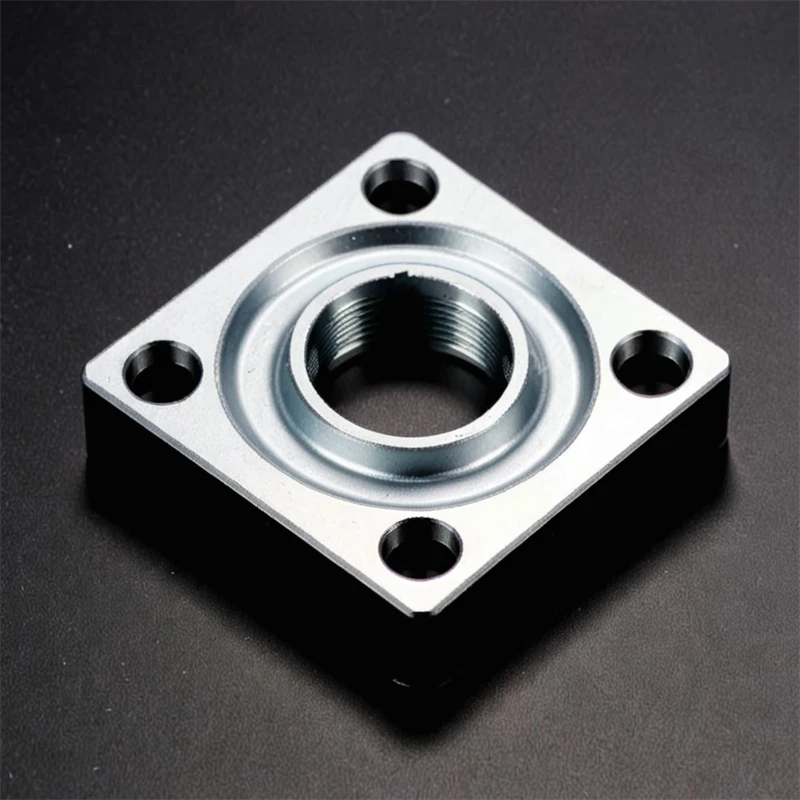
Now, let's talk about high - pressure die casting. In High Pressure Die Casting Services, the pressure can range from a few thousand pounds per square inch (psi) to tens of thousands of psi. This high pressure is what allows for the production of parts with very high precision and a high production rate. The high pressure forces the molten metal into the mold so quickly that it solidifies almost instantly, creating a part with a fine - grained structure and excellent mechanical properties.
One of the benefits of using high pressure in die casting is that it can reduce the porosity in the final part. Porosity is when there are small holes or voids in the metal, which can weaken the part. By using high pressure, the molten metal is compressed, and these voids are minimized. This results in a stronger, more reliable part.
However, there are also some challenges associated with high - pressure die casting. The equipment needed to generate and control such high pressures is more expensive and complex. There's also a higher risk of wear and tear on the mold due to the high forces involved. So, it's important to find the right balance between the pressure and the cost - effectiveness of the process.
As a die casting supplier, we've got the experience and the know - how to figure out the right die casting pressure for each project. We work closely with our clients to understand their requirements, whether it's for a simple aluminum bracket or a complex zinc component. We take into account all the factors I've mentioned above and use our expertise to optimize the die casting process.
If you're in the market for die casting services, whether it's aluminum, zinc, or high - pressure die casting, we're here to help. We can provide you with high - quality parts that meet your specifications and budget. Our team is dedicated to ensuring that every project we take on is a success.
So, if you're interested in discussing your die casting needs, don't hesitate to reach out. We're ready to have a chat, answer your questions, and work with you to find the best solution for your project. Whether you're a small business looking for a few custom parts or a large corporation in need of high - volume production, we've got the capabilities to handle it.
References
- Campbell, J. (2003). Castings. Butterworth - Heinemann.
-ASM Handbook Committee. (2008). ASM Handbook, Volume 15: Casting. ASM International.
Send Inquiry