


What is the impact of 5G on CNC turning?
Aug 19, 2025
Leave a message
In the era of rapid technological advancement, the emergence of 5G technology has brought about far - reaching changes across various industries. As a supplier of CNC Turning Parts, CNC Turning Machining, and CNC Turning Services, I have witnessed firsthand the significant impact of 5G on the CNC turning sector.
1. Enhanced Connectivity and Real - time Monitoring
One of the most prominent impacts of 5G on CNC turning is the improvement in connectivity. Traditional CNC turning machines often relied on wired connections or older wireless protocols, which had limitations in terms of speed, range, and reliability. With 5G, the high - speed and low - latency communication capabilities enable seamless connectivity between CNC turning machines, sensors, and control systems.
In our CNC turning workshop, we have equipped our machines with a network of sensors that collect a vast amount of data, including temperature, vibration, and tool wear. Thanks to 5G, this data can be transmitted in real - time to a central monitoring system. For example, if a sensor detects abnormal vibration in a turning tool, an immediate alert can be sent to the operator's mobile device. This real - time monitoring allows for proactive maintenance, reducing the risk of machine breakdowns and costly downtime.
Moreover, 5G enables remote monitoring and control of CNC turning machines. As a supplier, I can now access the status of our machines from anywhere in the world. If a customer has an urgent order and needs us to adjust the production schedule, I can remotely monitor the machine's progress and make necessary changes to the machining parameters. This level of flexibility and responsiveness was not possible before the advent of 5G.
2. Precision and Automation Improvement
The high - speed and low - latency nature of 5G also plays a crucial role in enhancing the precision of CNC turning. In CNC turning, even the slightest deviation in machining parameters can lead to defective parts. With 5G, the communication between the control system and the machine's actuators is almost instantaneous. This allows for more precise control of the cutting tools, resulting in higher - quality parts.
For instance, in complex turning operations where multi - axis movement is required, 5G ensures that the commands from the control system are executed accurately and simultaneously. The real - time feedback from sensors can be used to adjust the cutting speed, feed rate, and depth of cut in real - time, compensating for any variations in the workpiece material or tool wear.
In addition, 5G promotes the development of more advanced automation in CNC turning. Collaborative robots (cobots) can be integrated into the CNC turning process more effectively. These cobots can work alongside human operators, performing tasks such as loading and unloading workpieces. With 5G, the communication between the cobots and the CNC machines is seamless, enabling them to work in a coordinated manner. This not only increases productivity but also improves workplace safety by reducing the need for human operators to perform repetitive and potentially dangerous tasks.
3. Big Data and Analytics
The large - scale data collection enabled by 5G in CNC turning opens up new opportunities for big data analytics. All the data collected from sensors, machine controllers, and production logs can be analyzed to gain valuable insights into the machining process.
We can use data analytics to optimize the machining parameters. By analyzing historical data on different workpiece materials, tool types, and machining operations, we can identify the optimal combination of cutting speed, feed rate, and depth of cut for each specific job. This not only improves the quality of the parts but also reduces production time and costs.
Furthermore, data analytics can be used for predictive maintenance. By analyzing the sensor data related to machine health, we can predict when a machine component is likely to fail. This allows us to schedule maintenance in advance, minimizing unplanned downtime. For example, by analyzing the vibration patterns of a spindle, we can detect early signs of bearing wear and replace the bearings before they cause a major breakdown.
4. Supply Chain Integration
5G also has a significant impact on the supply chain in the CNC turning industry. As a supplier, we need to collaborate closely with our raw material suppliers, customers, and logistics partners. 5G enables real - time information sharing across the entire supply chain.
We can share production schedules with our raw material suppliers in real - time. This allows them to plan their production and delivery more accurately, ensuring a steady supply of materials. On the customer side, we can provide real - time updates on the production status of their orders. Customers can track the progress of their CNC Turning Parts from the moment the order is placed until it is shipped.

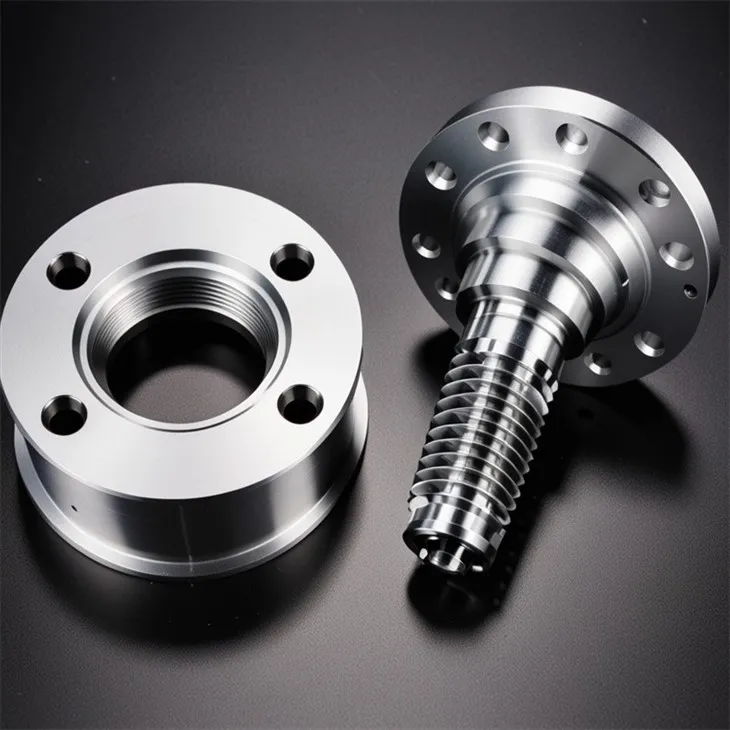
In terms of logistics, 5G - enabled tracking devices can be used to monitor the movement of finished parts. We can know exactly where our products are at any given time, and if there are any delays or issues during transportation, we can take immediate action to resolve them. This level of supply chain visibility and coordination helps to improve overall customer satisfaction and reduce inventory costs.
5. Challenges and Considerations
While the benefits of 5G in CNC turning are numerous, there are also some challenges that need to be addressed. One of the main challenges is the cost of implementing 5G technology. Upgrading existing CNC turning machines to support 5G connectivity requires significant investment in hardware and software. In addition, the cost of 5G network usage can also be a burden, especially for small and medium - sized enterprises.
Another challenge is the security of data transmitted over 5G networks. With the large amount of sensitive data being transferred, including production plans, customer information, and machine operation data, there is a risk of data breaches. We need to implement robust security measures, such as encryption and access control, to protect our data.
Conclusion
The impact of 5G on CNC turning is profound and far - reaching. It has transformed the way we operate our CNC turning business, from improving connectivity and precision to enabling advanced automation and data analytics. As a supplier of CNC Turning Parts, CNC Turning Machining, and CNC Turning Services, I am excited about the opportunities that 5G brings.
If you are interested in our high - quality CNC turning products and services, we welcome you to contact us for procurement and further discussions. We are committed to leveraging the latest 5G technology to provide you with the best - in - class solutions that meet your specific requirements.
References
- Industry 4.0 and the Future of Manufacturing. McKinsey & Company.
- The Impact of 5G on Industrial Internet of Things. Ericsson Research.
- Precision Manufacturing and 5G Connectivity. International Journal of Machine Tools and Manufacture.
Send Inquiry