


What is the minimum feature size that can be achieved in CNC machining?
Jul 30, 2025
Leave a message
What is the minimum feature size that can be achieved in CNC machining? That's a question I get asked a lot as a supplier of CNC Machinings. And it's not an easy one to answer because there are so many factors that come into play. In this blog post, I'm gonna break down the key elements that affect the minimum feature size in CNC machining and give you a better idea of what's possible.
Let's start with the basics. CNC machining is a manufacturing process that uses computer numerical control to automate the movement of machine tools. This allows for highly precise and repeatable production of parts with complex geometries. But when it comes to achieving really small feature sizes, things get a bit more complicated.
One of the biggest factors that limits the minimum feature size is the tool size. You see, the cutting tool is what actually removes material from the workpiece to create the desired shape. So, if you want to make a really small feature, you need a really small tool. However, small tools have their own limitations. They're more prone to breakage, and they can generate a lot of heat, which can damage the tool and the workpiece.
For example, if you're using a standard end mill, the smallest diameter you can typically find is around 0.002 inches (0.05 mm). But even with a tool this small, you might run into problems. The tool might deflect under the cutting forces, causing the feature to be larger than intended. And if the material is too hard or tough, the tool might wear out quickly or break.
Another factor that affects the minimum feature size is the machine's accuracy and stability. CNC machines are designed to be very precise, but there's always some degree of error. The machine's axes might not move exactly as commanded, and there might be some vibration or backlash in the system. These errors can accumulate over time and affect the final dimensions of the part.
To minimize these errors, it's important to use a high-quality CNC machine that's properly maintained. Regular calibration and alignment can help ensure that the machine is operating at its best. And using advanced control systems and feedback loops can help compensate for any errors that do occur.
The material being machined also plays a big role in determining the minimum feature size. Different materials have different properties, such as hardness, toughness, and ductility, which can affect how they respond to cutting. For example, soft materials like aluminum and brass are generally easier to machine than hard materials like steel and titanium.
In soft materials, you can often achieve smaller feature sizes because the cutting forces are lower, and the tool is less likely to break. However, soft materials can also be more prone to burring and deformation, which can affect the quality of the final part. Hard materials, on the other hand, require more powerful cutting tools and higher cutting forces, which can make it more difficult to achieve small feature sizes.
The cutting parameters, such as the cutting speed, feed rate, and depth of cut, also need to be carefully selected based on the material and the tool being used. Using the wrong parameters can lead to poor surface finish, tool wear, and even damage to the machine.
Let's talk about the machining process itself. There are different types of CNC machining processes, such as milling, turning, and drilling, each with its own capabilities and limitations when it comes to achieving small feature sizes.
Milling is a versatile process that can be used to create a wide range of features, including slots, pockets, and contours. With the right tool and setup, it's possible to achieve relatively small feature sizes in milling. However, milling can be a slow process, especially when machining small features, because the tool has to make multiple passes to remove the material.
Turning is a process used to create cylindrical parts, such as shafts and pins. In turning, the workpiece rotates while the cutting tool moves along the axis of rotation. This allows for very precise control of the diameter and length of the part. However, turning is generally limited to creating features that are symmetric about the axis of rotation.
Drilling is used to create holes in the workpiece. The smallest drill bits available are very small, but drilling small holes can be challenging. The drill bit can easily break or deflect, especially if the material is hard or the hole is deep. And getting a good surface finish inside the hole can be difficult.
So, what's the minimum feature size that can actually be achieved in CNC machining? Well, it depends on all of the factors I've mentioned above. In some cases, it might be possible to achieve feature sizes as small as a few microns (0.00004 inches). But this requires a combination of advanced technology, high-quality tools, and skilled operators.

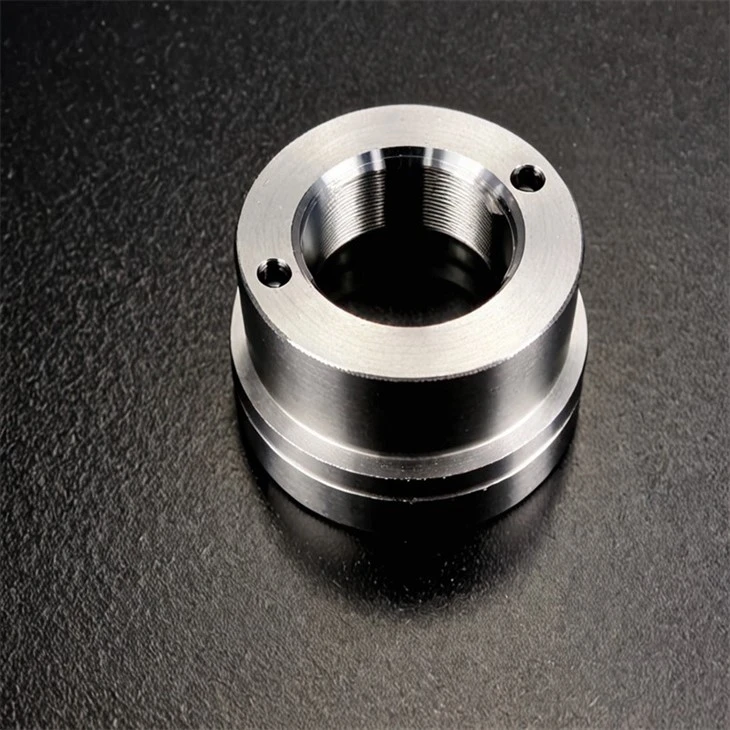
At our company, we have experience working with a wide range of materials and machining processes to achieve small feature sizes. We use state-of-the-art CNC machines and advanced tooling to ensure the highest level of precision and quality. Whether you need Precision CNC Machining Parts, CNC Machining Prototype, or Metal CNC Machining, we can work with you to find the best solution for your needs.
If you're looking for a reliable CNC machining supplier who can help you achieve the smallest feature sizes possible, we'd love to hear from you. We can provide you with a free quote and discuss your project in detail. Just reach out to us, and we'll work together to bring your ideas to life.
In conclusion, achieving the minimum feature size in CNC machining is a complex challenge that requires careful consideration of many factors. By understanding the limitations of the tools, machines, and materials, and by using the right techniques and processes, it's possible to achieve very small feature sizes with high precision and quality.
References:
- "CNC Machining Handbook" by Peter Zelinski
- "Manufacturing Engineering and Technology" by S. Kalpakjian and S. Schmid
- Industry research papers on advanced CNC machining techniques
Send Inquiry