


What is the role of the wire's flexibility in EDM wire cutting?
Aug 12, 2025
Leave a message
In the realm of precision manufacturing, Electrical Discharge Machining (EDM) wire cutting stands out as a highly effective technique for creating intricate and accurate parts. As a seasoned EDM wire cutting supplier, I've witnessed firsthand the pivotal role that wire flexibility plays in this process. In this blog, I'll delve into the significance of wire flexibility in EDM wire cutting, exploring its impact on various aspects of the machining process and the final product quality.
Understanding EDM Wire Cutting
Before we discuss the role of wire flexibility, it's essential to have a basic understanding of EDM wire cutting. This process uses a thin, electrically charged wire to cut through conductive materials, such as metals, by creating a series of rapid electrical discharges between the wire and the workpiece. The wire acts as an electrode, and the discharges erode the material, gradually shaping it into the desired form.
The Importance of Wire Flexibility
Wire flexibility is a critical factor in EDM wire cutting, influencing everything from the machining process itself to the quality and precision of the final product. Here are some key ways in which wire flexibility impacts EDM wire cutting:
1. Ability to Navigate Complex Geometries
One of the primary advantages of EDM wire cutting is its ability to create complex and intricate shapes that would be difficult or impossible to achieve with traditional machining methods. Wire flexibility plays a crucial role in this process, allowing the wire to navigate tight corners, curves, and other complex geometries without breaking or losing its shape. This enables manufacturers to produce highly detailed and precise parts with minimal distortion or error.
For example, in the aerospace industry, EDM wire cutting is often used to create turbine blades and other components with complex internal geometries. The flexibility of the wire allows it to follow the contours of these intricate shapes, ensuring accurate and consistent results.
2. Reduced Risk of Wire Breakage
During the EDM wire cutting process, the wire is subjected to high levels of stress and tension as it moves through the workpiece. If the wire is too rigid, it may be more prone to breakage, which can disrupt the machining process and lead to costly downtime. On the other hand, a flexible wire is better able to withstand these forces, reducing the risk of breakage and ensuring a more reliable and efficient machining process.
In addition, wire flexibility can also help to prevent wire breakage caused by debris or other contaminants in the machining environment. A flexible wire is more likely to bend or deflect around these obstacles, rather than getting caught and breaking.
3. Improved Surface Finish
The flexibility of the wire can also have a significant impact on the surface finish of the machined part. A flexible wire is able to conform more closely to the surface of the workpiece, resulting in a smoother and more uniform finish. This is particularly important in applications where a high-quality surface finish is required, such as in the medical or electronics industries.
For example, in the production of medical implants, a smooth surface finish is essential to prevent irritation and infection in the patient's body. EDM wire cutting with a flexible wire can help to achieve this level of precision and quality.
4. Enhanced Cutting Efficiency
Wire flexibility can also improve the cutting efficiency of the EDM wire cutting process. A flexible wire is able to move more freely through the workpiece, reducing the amount of friction and resistance between the wire and the material. This results in faster cutting speeds and lower energy consumption, making the process more cost-effective and environmentally friendly.
In addition, wire flexibility can also help to reduce the wear and tear on the wire, extending its lifespan and reducing the frequency of wire changes. This can further improve the efficiency and productivity of the machining process.
Factors Affecting Wire Flexibility
Several factors can affect the flexibility of the wire used in EDM wire cutting. These include:
1. Wire Material
The material of the wire is one of the most important factors affecting its flexibility. Different materials have different levels of flexibility, depending on their composition and properties. For example, brass wires are generally more flexible than tungsten wires, making them a popular choice for applications where wire flexibility is crucial.
2. Wire Diameter
The diameter of the wire also plays a role in its flexibility. Thinner wires are generally more flexible than thicker wires, as they have less mass and are more easily bent or deflected. However, thinner wires may also be more prone to breakage, so it's important to choose the right wire diameter for the specific application.

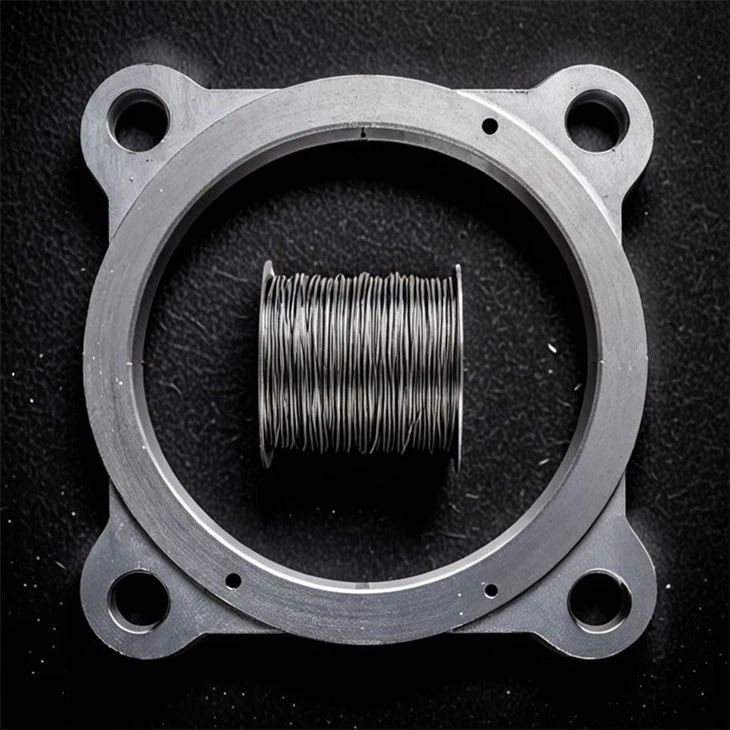
3. Coating and Surface Treatment
The coating and surface treatment of the wire can also affect its flexibility. Some coatings and treatments can increase the wire's flexibility, while others may reduce it. For example, a lubricious coating can help to reduce friction and improve the wire's ability to move through the workpiece, while a hard coating may make the wire more rigid and less flexible.
Choosing the Right Wire for Your Application
As an EDM wire cutting supplier, I understand the importance of choosing the right wire for your specific application. When selecting a wire, it's important to consider factors such as the material of the workpiece, the complexity of the geometry, the desired surface finish, and the cutting speed and efficiency requirements.
In addition, it's also important to work with a reputable supplier who can provide high-quality wires that are specifically designed for EDM wire cutting. At our company, we offer a wide range of wires in different materials, diameters, and coatings to meet the diverse needs of our customers. Our team of experts can also provide technical support and guidance to help you choose the right wire for your application.
Conclusion
In conclusion, wire flexibility plays a crucial role in EDM wire cutting, influencing everything from the ability to navigate complex geometries to the surface finish and cutting efficiency of the final product. As an EDM wire cutting supplier, I'm committed to providing our customers with high-quality wires that offer the optimal balance of flexibility, strength, and durability.
If you're interested in learning more about our Wire EDM Services or EDM Wire Cutting Services, or if you have any questions about choosing the right wire for your application, please don't hesitate to contact us. We'd be happy to discuss your needs and provide you with a customized solution that meets your specific requirements. And if you're concerned about Wire EDM Machining Cost, our team can work with you to find the most cost-effective option without compromising on quality.
References
- "Electrical Discharge Machining: Fundamentals and Applications" by P. K. Rajurkar, S. K. Panda, and S. C. Jain
- "Wire EDM: A Comprehensive Guide" by the Precision Machining Technology Association
- "Advances in EDM Wire Cutting Technology" by the International Journal of Machine Tools and Manufacture
Send Inquiry