


What is the shrinkage rate in vacuum casting?
May 30, 2025
Leave a message
What is the shrinkage rate in vacuum casting?
As a professional supplier in the field of vacuum casting, I often encounter questions from clients about the shrinkage rate in this process. Understanding shrinkage rate is crucial for ensuring the quality and accuracy of the final cast parts. In this blog post, I will delve into the concept of shrinkage rate in vacuum casting, factors that affect it, and how we manage it to provide high - quality products.
What is the shrinkage rate in vacuum casting?
Shrinkage rate in vacuum casting refers to the percentage of reduction in the volume or dimensions of the casting after it has cooled and solidified compared to its volume or dimensions in the molten state. During vacuum casting, a liquid material, such as resin or metal alloy, is poured into a mold under a vacuum environment to eliminate air bubbles and ensure a dense and defect - free casting. As the material cools down, it contracts, resulting in shrinkage.
The shrinkage can occur both linearly and volumetrically. Linear shrinkage is measured as the change in length of a casting, and it is usually expressed as a percentage of the original dimension in a particular direction. Volumetric shrinkage, on the other hand, is related to the change in the overall volume of the casting.
Factors affecting the shrinkage rate
Material properties
Different materials have different shrinkage characteristics. For example, metals generally have higher shrinkage rates compared to plastics. Aluminum alloys, which are commonly used in Vacuum Casting Aluminum Services, typically have a linear shrinkage rate in the range of 1.2% - 2%. Thermosetting resins used in Vacuum Mold Casting Services may have a lower shrinkage rate, often around 0.1% - 0.5%. The composition of the material also plays a role. An alloy with a higher percentage of certain elements may have a different shrinkage behavior due to the unique physical and chemical properties of those elements.
Cooling rate
The rate at which the casting cools down is a significant factor influencing shrinkage. A rapid cooling rate can cause uneven shrinkage, leading to internal stresses and potentially resulting in cracks or warping of the casting. Slow and controlled cooling allows for more uniform shrinkage, reducing the risk of defects. We carefully control the cooling process in our Vacuum Casting Metal Services to ensure that the shrinkage occurs in a predictable and consistent manner.
Mold design
The design of the mold can affect the shrinkage of the casting. The size and shape of the mold cavity, as well as the presence of any draft angles and runners, can impact how the material flows and solidifies. If the mold does not allow for proper shrinkage compensation, the final casting may not meet the desired dimensions. We use advanced CAD/CAM technology to design molds that take into account the expected shrinkage of the material, so that the finished part is within the required tolerance range.
Casting geometry
Complex geometries can experience non - uniform shrinkage. Parts with thick and thin sections may cool at different rates, causing differential shrinkage. For example, a thick section may take longer to cool compared to a thin section, and this difference can lead to distortion of the casting. When dealing with complex geometries, we conduct detailed simulations to predict the shrinkage behavior and make necessary adjustments to the mold design or casting process.
Managing the shrinkage rate
As a supplier, we employ several strategies to manage and control the shrinkage rate in vacuum casting:
Material selection
We work closely with our clients to select the most appropriate material for their specific application. By understanding the requirements of the final product, such as strength, durability, and dimensional accuracy, we can recommend a material with the optimal shrinkage characteristics. In some cases, we may even develop custom - formulated materials to meet unique design specifications while minimizing shrinkage.
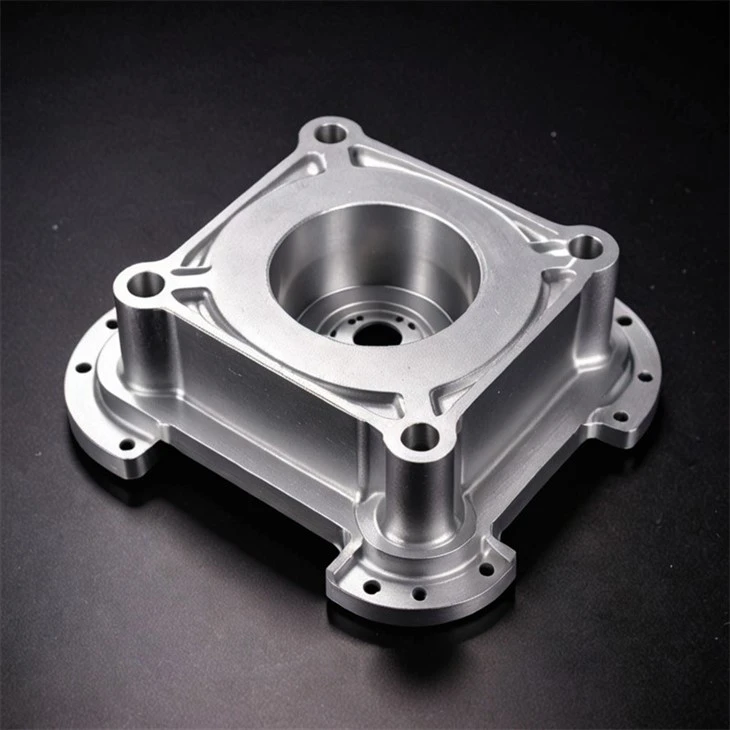

Precision mold design
Our team of experienced engineers uses state - of - the - art software to design molds that account for the expected shrinkage of the chosen material. We create oversized mold cavities based on the calculated shrinkage rate so that when the casting cools and shrinks, it will end up at the desired dimensions. We also incorporate features such as wells and vents in the mold design to ensure proper material flow and venting of air during the casting process, which can help reduce shrinkage - related defects.
Process optimization
We continuously monitor and optimize the casting process parameters to control the shrinkage rate. This includes adjusting the pouring temperature, pouring speed, and cooling rate. We use real - time sensors and monitoring systems to ensure that the process variables remain within the specified ranges. By maintaining a stable and controlled process environment, we can minimize the variability in shrinkage and produce consistent, high - quality castings.
Importance of accurate shrinkage rate management
Accurately managing the shrinkage rate is of utmost importance in vacuum casting for several reasons:
Dimensional accuracy
For parts that require precise dimensions, such as components in aerospace or medical devices, even a small deviation due to shrinkage can render the part unusable. By controlling the shrinkage rate, we can ensure that the final castings meet the tight tolerances specified by our clients.
Product quality
Shrinkage - related defects, such as sink marks, porosity, and warping, can significantly reduce the quality and performance of the casting. Effective management of the shrinkage rate helps to eliminate these defects, resulting in a smooth - finished, high - integrity product.
Cost - effectiveness
By minimizing shrinkage - related rework and scrap, we can help our clients save on production costs. Producing parts that meet the required quality standards on the first try reduces the overall manufacturing cost and shortens the lead time.
Conclusion
In summary, the shrinkage rate in vacuum casting is a critical factor that can significantly impact the quality and accuracy of the final product. As a professional supplier in the vacuum casting industry, we understand the complex nature of shrinkage and are committed to providing our clients with high - quality castings. We employ a comprehensive approach that includes careful material selection, precision mold design, and process optimization to manage and control the shrinkage rate.
If you are in need of vacuum casting services and are concerned about shrinkage and its impact on your project, we would love to work with you. Our team of experts is ready to provide you with customized solutions based on your specific requirements. Contact us today to discuss your project and start the journey towards high - precision, high - quality vacuum - cast parts.
References
- Xu, F., & Jiang, M. (2018). Shrinkage behavior and prediction in investment casting of titanium alloys. Journal of Materials Engineering and Performance, 27(7), 3212 - 3220.
- Gibson, I., Rosen, D. W., & Stucker, B. (2015). Additive Manufacturing Technologies: 3D Printing, Rapid Prototyping, and Direct Digital Manufacturing. Springer. (Although it is about additive manufacturing, it provides some general knowledge on shrinkage in material solidification)
- Campbell, J. (2014). Castings. Butterworth - Heinemann.
Send Inquiry