


What is the vacuum level required for effective vacuum casting?
Jul 17, 2025
Leave a message
Hey there! As a supplier in the vacuum casting business, I often get asked about the vacuum level required for effective vacuum casting. It's a crucial question because the right vacuum level can make or break the quality of the cast parts. In this blog post, I'm gonna share my insights on this topic and help you understand what you need to know.
What is Vacuum Casting?
Before we dive into the vacuum level, let's quickly go over what vacuum casting is. Vacuum casting is a process used to create high - quality, detailed parts from a master pattern. The process involves creating a mold from the master pattern, then placing the mold in a vacuum chamber. The liquid material, like resin or metal, is then poured into the mold under vacuum conditions. The vacuum helps to remove air bubbles from the material, resulting in a more accurate and defect - free cast part.
Why is Vacuum Level Important?
The vacuum level plays a vital role in the vacuum casting process. When the air is removed from the mold cavity, it allows the liquid material to flow more freely and fill all the intricate details of the mold. If the vacuum level is too low, there may still be air trapped in the material, which can lead to porosity, voids, or incomplete filling of the mold. On the other hand, if the vacuum level is too high, it can cause issues like boiling of the liquid material or deformation of the mold.
Factors Affecting the Required Vacuum Level
There are several factors that can influence the ideal vacuum level for vacuum casting.
Material Properties
Different materials have different viscosities and surface tensions. For example, a highly viscous material may require a higher vacuum level to flow properly into the mold. Resins with low surface tension can be cast at relatively lower vacuum levels compared to those with high surface tension. Metals also have their own unique requirements. Aluminum, for instance, has specific melting and casting characteristics that affect the necessary vacuum level. You can learn more about Vacuum Casting Aluminum Services on our website.
Mold Complexity
The complexity of the mold design is another important factor. A mold with fine details, thin walls, or undercuts will need a higher vacuum level to ensure that the material fills all the areas. Simple molds with large, open cavities can often be cast at lower vacuum levels.
Part Size
Larger parts generally require a higher vacuum level. This is because there is more volume of material to fill, and a higher vacuum helps to push the material through the mold more effectively. Smaller parts may be cast at lower vacuum levels as there is less distance for the material to travel.
Typical Vacuum Levels for Different Applications
Resin Casting
In resin casting, a common vacuum level range is between 0.5 and 10 millibars (mbar). For general - purpose resin casting of simple parts, a vacuum level of around 5 - 10 mbar may be sufficient. However, for high - precision resin parts with fine details, a vacuum level closer to 0.5 - 1 mbar may be required.
Metal Casting
Metal casting typically requires a much higher vacuum level. For aluminum casting, a vacuum level in the range of 1 - 100 millitorr (mTorr) is often used. This low pressure helps to prevent oxidation of the aluminum during the casting process and ensures a high - quality cast. You can find more information about Vacuum Casting Metal Services on our site.
Vacuum Mold Casting
In vacuum mold casting, which can involve a variety of materials and mold types, the vacuum level can vary widely. For simple rubber or plastic molds, a vacuum level of 10 - 50 mbar may be adequate. But for more complex molds with high - performance materials, the vacuum level may need to be as low as 1 mbar or even lower. Check out our Vacuum Mold Casting Services to see how we handle different requirements.
Measuring and Controlling the Vacuum Level
To ensure the right vacuum level is maintained during the casting process, it's essential to have accurate measuring and control systems. Vacuum gauges are used to measure the pressure inside the vacuum chamber. These gauges can provide real - time information about the vacuum level, allowing operators to make adjustments as needed.

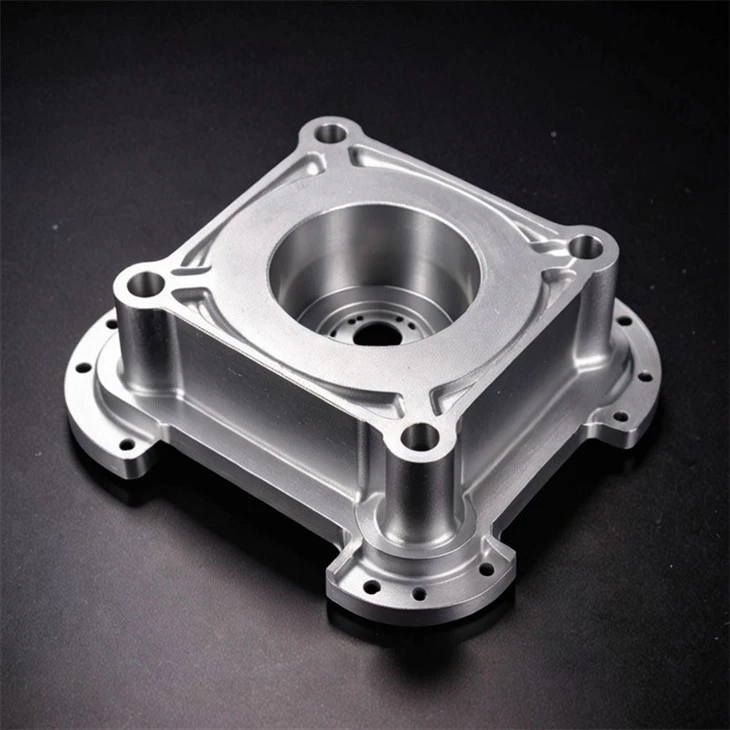
Control systems can be automated to maintain a consistent vacuum level throughout the casting process. This is especially important for large - scale production, where variations in the vacuum level can lead to inconsistent part quality.
How We Ensure the Right Vacuum Level
As a vacuum casting supplier, we have a team of experienced technicians who understand the nuances of different materials and mold designs. We use state - of - the - art vacuum equipment and monitoring systems to ensure that the vacuum level is precisely controlled.
Before starting a new casting project, we conduct tests to determine the optimal vacuum level for the specific material and mold. We take into account all the factors mentioned above, such as material properties, mold complexity, and part size. This way, we can guarantee that the cast parts meet the highest quality standards.
Conclusion
In conclusion, the vacuum level required for effective vacuum casting depends on multiple factors, including material properties, mold complexity, and part size. By understanding these factors and using the right measuring and control systems, we can achieve high - quality cast parts.
If you're in the market for vacuum casting services, whether it's for metal, aluminum, or other materials, we're here to help. We have the expertise and equipment to handle your project with precision. Don't hesitate to reach out to us for a consultation and let's start creating high - quality cast parts together.
References
- Smith, J. (2020). Vacuum Casting Technology. Publisher XYZ.
- Johnson, A. (2019). Handbook of Material Casting. ABC Publications.
Send Inquiry