


Can cnc millings work with different types of cutters?
Jan 16, 2026
Leave a message
Sure, here is an English blog about "Can cnc millings work with different types of cutters?"
Can CNC Millings Work with Different Types of Cutters?
Hey there! I'm a supplier of CNC Millings, and I'm super excited to dig into the question - can CNC millings work with different types of cutters? Well, the short answer is a big yes! In this blog, I'll break down how and why CNC millings can handle various cutters, and the benefits this offers in the machining world.
First off, let's quickly understand what CNC Milling Process is. It's a subtractive manufacturing process where material is removed from a workpiece using rotary cutters. CNC, or Computer Numerical Control, means that the milling machine is controlled by a computer program, which can accurately guide the cutter to create complex shapes and parts.
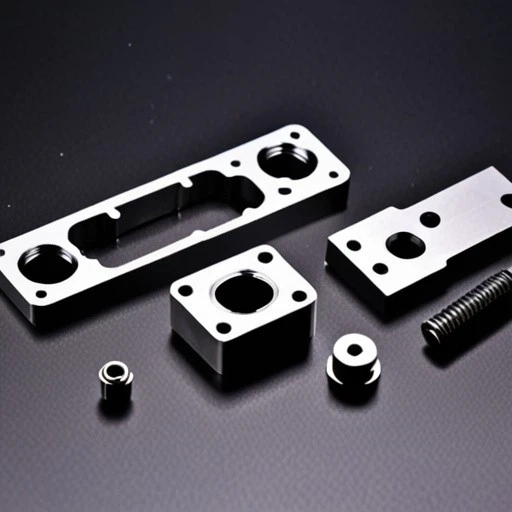

Now, let's talk about the different types of cutters that CNC millings can work with. There are several common ones, each with its own unique features and uses.
End Mills: These are probably the most commonly used cutters in CNC milling. End mills come in a variety of shapes and sizes, such as square end mills, ball end mills, and corner radius end mills. Square end mills are great for making flat surfaces and square shoulders in a workpiece. Ball end mills, on the other hand, are ideal for creating curved surfaces and 3D contours. They're widely used in industries like mold making and aerospace, where precision and smooth surface finishes are crucial. Corner radius end mills combine the properties of square and ball end mills, offering strength and the ability to create rounded corners.
Face Mills: Face mills are used for creating large flat surfaces. They have multiple cutting edges arranged in a circular pattern on the face of the cutter. They can remove a significant amount of material quickly, which makes them efficient for machining large workpieces. Face mills can be used in both roughing and finishing operations, depending on the type of insert and the cutting parameters used.
Slot Drills: As the name suggests, slot drills are used for cutting slots in a workpiece. They can cut straight into the material and are typically used when the width of the slot needs to be precise. Slot drills are often used in the production of mechanical parts, where slots are required for fitting other components.
Drill Bits: Although they're more commonly associated with drilling operations, drill bits can also be used in CNC milling machines. They're used for creating holes in the workpiece. CNC millings can accurately position and guide the drill bit to create holes of various sizes and depths with high precision.
Tapered End Mills: These cutters have a tapered shape, which allows them to create tapered features in a workpiece. They're often used in the production of custom parts where tapered holes or cavities are required, such as in some automotive or mechanical engineering applications.
So, why is it so great that CNC millings can work with different types of cutters? Well, it gives a lot of flexibility in manufacturing. With just one CNC milling machine, you can produce a wide range of parts and products. For example, in a small-scale manufacturing shop, they might use end mills to create the basic shape of a part, then switch to a face mill for a smooth finish. Later, they can use drill bits to add holes as needed. This versatility saves time and money, as there's no need to invest in multiple specialized machines for different cutting tasks.
Another advantage is precision. Since the CNC milling machine is controlled by a computer program, it can accurately control the movement of the cutter, no matter which type of cutter is being used. This means that the same high level of precision can be maintained across different operations and with different cutters. Whether you're making a simple part with a square end mill or a complex 3D model with a ball end mill, the CNC milling machine will ensure that the final product meets the required specifications.
In addition, working with different types of cutters also allows for optimization of the machining process. For example, if you're working on a large workpiece, you might start with a face mill to remove the bulk of the material quickly (roughing operation). Then, you can switch to an end mill for a more detailed finishing operation to achieve the desired surface finish. This way, you can maximize the efficiency of the machining process and reduce the overall production time.
However, it's not all a walk in the park when using different cutters in CNC millings. There are a few things to keep in mind. First, you need to make sure that the cutter is properly installed and secured in the machine. A loose cutter can cause inaccurate cuts, damage to the workpiece, and even pose a safety risk. Second, you need to select the right cutting parameters, such as cutting speed, feed rate, and depth of cut, for each type of cutter. These parameters depend on factors like the material of the workpiece, the type of cutter, and the desired surface finish. Using the wrong parameters can lead to poor cutting performance, premature wear of the cutter, and even breakage.
Also, cutter selection is crucial. You need to choose the right cutter for the job based on the requirements of the part being produced. For example, if you need to create a smooth curved surface, a ball end mill is a better choice than a square end mill. And if you're dealing with a hard material, you might need a cutter made of a more durable material, like carbide.
In conclusion, CNC millings can definitely work with different types of cutters, and this ability offers a whole lot of benefits in the manufacturing industry. It provides flexibility, precision, and efficiency, allowing for the production of a wide variety of parts and products. If you're in the market for high - quality CNC millings that can handle different cutters with ease, I'm here to help. I can offer you professional advice on cutter selection, and provide top - notch CNC millings that meet your production needs. Whether you're a small - scale manufacturer or a large industrial enterprise, we can have a great discussion about how our machines can fit into your production process. Reach out to us to start the procurement discussion and take your manufacturing to the next level!
References
- Manufacturing Technology Handbooks: These handbooks provide in - depth knowledge about CNC machining, including different types of cutters and their applications.
- Industry standards and research papers related to CNC milling processes, which offer insights into the latest trends and best practices in the field.
Send Inquiry